

The Semiotics of the Soft Launch
There was a time—not long ago—when announcing you were in a relationship required a formal declaration. The Facebook status change. The tagged brunch photos. The conspicuously staged shot of your partner doing something aggressively ordinary just so people knew they existed. Romance used to be synonymous with documentation, and documentation was practically an Olympic sport. If you didn’t upload a couple photo at least once a quarter, your relationship wasn’t “real.”
Now all it takes is a hand grabbing yours from across the table to send your followers into a forensic spiral. One cropped shoulder and suddenly everyone you’ve ever met is texting the same thing: is that who I think it is? You’ve soft-launched. It’s the relationship teaser trailer—a gesture that’s strategic, coy, and somehow more intimate than a hard launch ever was. A soft launch reveals how we navigate love in the paradox of 2025: everything feels public, yet nothing feels safe to fully share.
Soft launching has quietly evolved from a cute dating trend into a cultural ritual. It’s not just an aesthetic—it's a language. A subtle dialect of vibes and silhouettes. A way to say “there’s someone” without opening the door to commentary from people who don’t even text you on your birthday. Like any ritual that sticks around, it reflects the mood of the moment.
The New Privacy: Share Everything, Reveal Nothing
For all our scrolling, posting, and DM’ing, people have become surprisingly intentional about what intimacy looks like online. The soft launch is a boundary disguised as a mood. It’s participation without exposure—romantic minimalism engineered for mental survival.
This shift didn’t appear from nowhere. Millennials spent the last decade broadcasting their relationships like limited series: episode one, the meet-cute; episode three, the hard launch; episode seven, the breakup notes app; episode eight, the “new me” haircut. Gen Z watched that saga unfold and said absolutely not. Public love means public loss, and who has the emotional bandwidth for that? After years of feed-to-feed breakups, rebrands, mutual unfollowings, and messy discourse cycles, the appetite for public romance shrank dramatically.
Now visibility feels like a luxury good—selectively offered, rarely free. Posting a face feels intimate. Posting a soft launch feels like a cautious compromise, a whisper instead of a declaration. You get to enjoy the thrill of someone new without placing them on the chopping block of public opinion.
It’s also practical. If things go left? A soft launch deletes cleanly. One photo, gone. No archive of matching outfits. No anniversary posts haunting your grid like digital ghosts. The soft launch is insurance.
And yet it’s still fun. It still feels like a reveal, while also a boundary with a sense of humor.
Performance, But Make It Relational
Dating has always involved some level of performance. You present the best version of yourself, you tell the polished stories, you pretend you don’t obsessively Google the person afterward. But social media took that performance and turned it cinematic. Think back to the peak Pinterest-Couple Goals era: coordinated outfits, European rooftops, long-limbed silhouettes on deserted beaches. Everything was a scene. Everything was choreographed.
The soft launch is the opposite of all that choreography. It's a performance that intentionally underperforms.
You know the tropes: the second coffee cup; the restaurant table with two settings; the blurry passenger-princess POV; the mirror selfie where only one torso is visible. These images are not mistakes. They’re visual breadcrumbs. They send a message without explaining the plot.
The soft launch also mirrors how relationships actually unfold—incrementally, quietly, with room to breathe. You don’t owe the internet a definition. You don’t need to respond to your ex’s cousin asking “who is this??” in your comments. You don’t have to commit your relationship to the permanent record of your camera roll.
It keeps the stakes low and the aesthetic high. It makes the relationship about the relationship again, not the reaction.
Our Favorite Soft Launches of the 2020s
If the soft launch is the cinematic teaser, the 2020s have given us plenty of award-winning examples. These aren’t celebrity hard launches with matching outfits and publicists in the background. These are the quieter, cleverer, sometimes accidental soft launches that became cultural touch-points.
Lori Harvey’s annual mystery-man rollouts
Lori has perfected the soft launch as a brand. A cropped arm there, a shadowy vacation photo here. By the time a full face appears, we feel like we’ve worked for it.
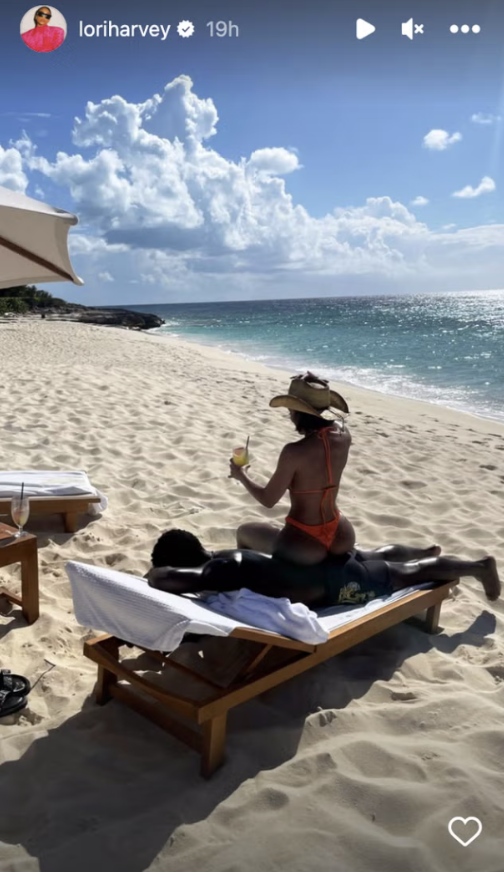
Lori harvey/instagram
The TikTok ‘boyfriend reveal’ trend
This one felt like theater. Women would do a full outfit-of-the-day—serve main character, establish she is the star—and only then drag the boyfriend into frame like, “Fine, here’s the man I’ve been hiding for two years.” It’s like unlocking a bonus level.
Kourtney Kardashian’s tattoo-hand reveal
Before Kourtney and Travis Barker became the patron saints of public PDA, their relationship entered the chat with a classic soft-launch sleight of hand. After Valentine’s Day dating rumors swirled, Kourtney posted a photo of her fresh manicure gently holding a tattoo-covered hand the internet instantly recognized as Travis’s. No face, no announcement, just vibes and verification.
The Vacation Soft Launch
The leading soft-launch aesthetic of the decade: two pairs of feet on a balcony, a plate of oysters, a cocktail in golden hour light. The partner’s existence confirmed only through vibes.
