

Aesthetic Expression: Do Ho Suh’s Portals of Memory
The color comes first. A soft pastel glow drifts in the air, vague but strangely familiar. As you step closer, the blurred outlines take shape: a hallway, a doorframe, a light switch, rendered not in wood or brick but in sheer fabric that appears to float. The walls seem to hold their breath, the floor barely making a sound underfoot. You enter a space that feels like a memory, turning intangible memory into physical architecture.
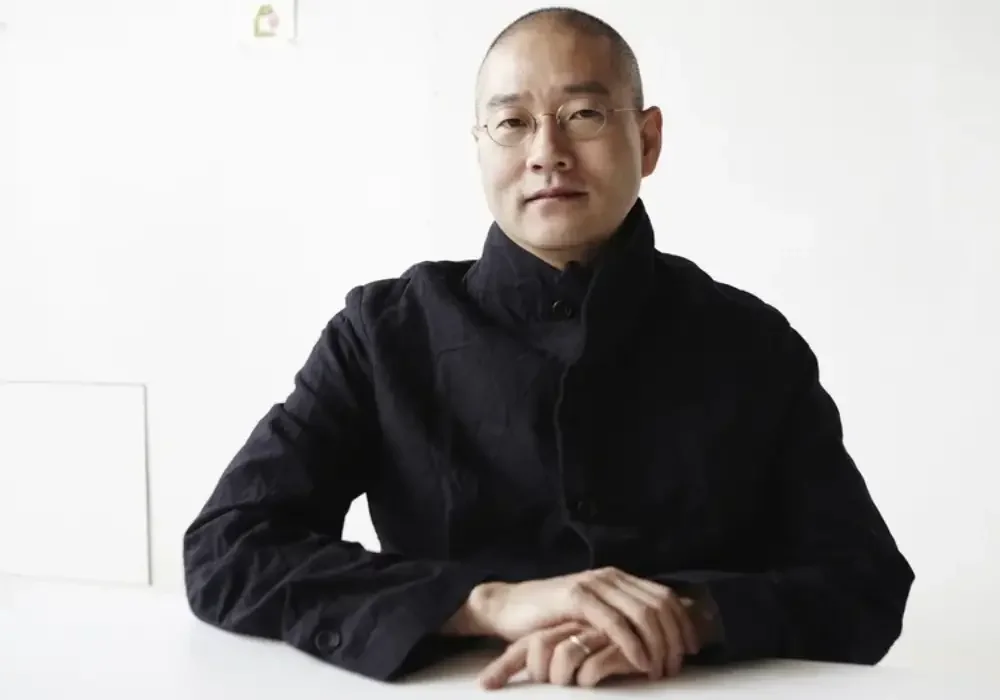
Such is the world of Do Ho Suh, the Korean-born artist whose career has become a meditation on home, displacement, memory, and belonging. Through translucent fabric installations, paper rubbings, thread drawings, and immersive interiors, Suh doesn’t just reconstruct space; he resurrects memory, reimagines home, and casts architecture as emotional geography.
Memory as Material: Fabric Houses and Rubbings
Born in Seoul in 1962, Suh studied traditional Korean painting before migrating to the United States in the early 1990s for further art training. He earned a BFA from the Rhode Island School of Design and later an MFA in sculpture from Yale University.
Each move marked not just a change of address, but a shift in how he perceived space and belonging. As he later described, living abroad awakened in him a persistent longing for a home that existed elsewhere and perhaps only in memory. This existential tension became the seed for his radical reinvention of what “home” means.
In 1999, Suh unveiled one of his earliest major works: a full-scale fabric reconstruction of his childhood home in Seoul. Titled Seoul Home, the installation mapped every corridor, room, fixture, from kitchen to radiator, but all rendered in translucent polyester and silk. The result: a home you could enter, wander through, yet never inhabit. The walls remained diaphanous, the details ghostly.
But Suh’s devotion to memory didn’t end with fabric. Over the years, he expanded his practice to include delicate paper rubbings of physical spaces: walls, doors, moldings, floors, all surfaces saturated with lived time. In his series Rubbing/Loving: Seoul Home (2013–2022), he covered his childhood hanok in mulberry paper, rubbed every surface with graphite, and then reassembled those rubbings as wall-like sculptures. It was a tactile, intimate, and almost devotional way to archive memory.
His art began to ask: what if home isn’t bricks and mortar, but touch, scent, texture, and memory? What if home isn’t a place, but a feeling carried across borders?
Nest/s & Walk the House: Homes as Palimpsests
Fast-forward to the present. For his latest major show, Walk the House at Tate Modern, Suh unveiled ambitious new works. Leading the exhibition is Nest/s, a vast, woven installation built from 1:1 replicas of living spaces Suh occupied in Seoul, New York, London, Berlin, and beyond. Corridors bleed into corridors; rooms overlap; doorways lead to memories rather than destinations. The effect is disorienting and familiar all at once, as if you’re walking through a dream built from past lives.
Another centerpiece, Perfect Home: London, Horsham, New York, Berlin, Providence, Seoul, collects small domestic details, such as doorknobs, light switches, sockets, and stitches them onto translucent walls. The everyday becomes uncanny, the domestic intimate yet strange, as if our sense of home were being quietly unmoored and reassembled in another dimension.
Through these works, Suh draws attention to what many migrants and diasporic people know instinctively: the idea of home isn’t a fixed address. It’s a constellation of memories, sensations, objects, and rituals.
Walking Through Memory: The Viewer as Migrant
What makes Suh’s work transcend architecture, transcend nostalgia, is its invitation: he doesn’t just show you his memories. Instead, he lets you walk through them. Galleries become intimate corridors of the self. The translucent walls allow light, shadows, silhouettes, and you, the viewer, to pass through as ghost and flesh. The fabric isn’t just a material, it’s a metaphor: home that breathes, that moves, that holds you even when you are far.
By situating nested memories within public institutions, Suh demands that we consider how identity, displacement, belonging, and architecture intersect. He turns the museum into a memory palace—open to everyone willing to step into its corridors.
Why Do Ho Suh Matters, Especially Right Now
In 2025, when global migration is rampant and ideas of home are more fluid than ever, Do Ho Suh’s work resonates in a way it perhaps never has before. He doesn’t romanticize roots; he honors movement. He doesn’t promise permanence; he preserves impermanence. In a world where many carry fragments of multiple homes, his art gives those fragments form.
For readers of The Ambony who navigate identity, diaspora, cultural memory, or simply the personal memory of places left behind, Suh’s installations offer more than beauty. They offer recognition. They offer an archive for what lives inside you: the corridors, doorways, and small details that made you.
In turning memory into space, and space into memory, Do Ho Suh reminds us that home isn’t always where you are. Sometimes, it's what you carry.
