

Ride Report: Rewriting The Commute With The Gogoro JEGO
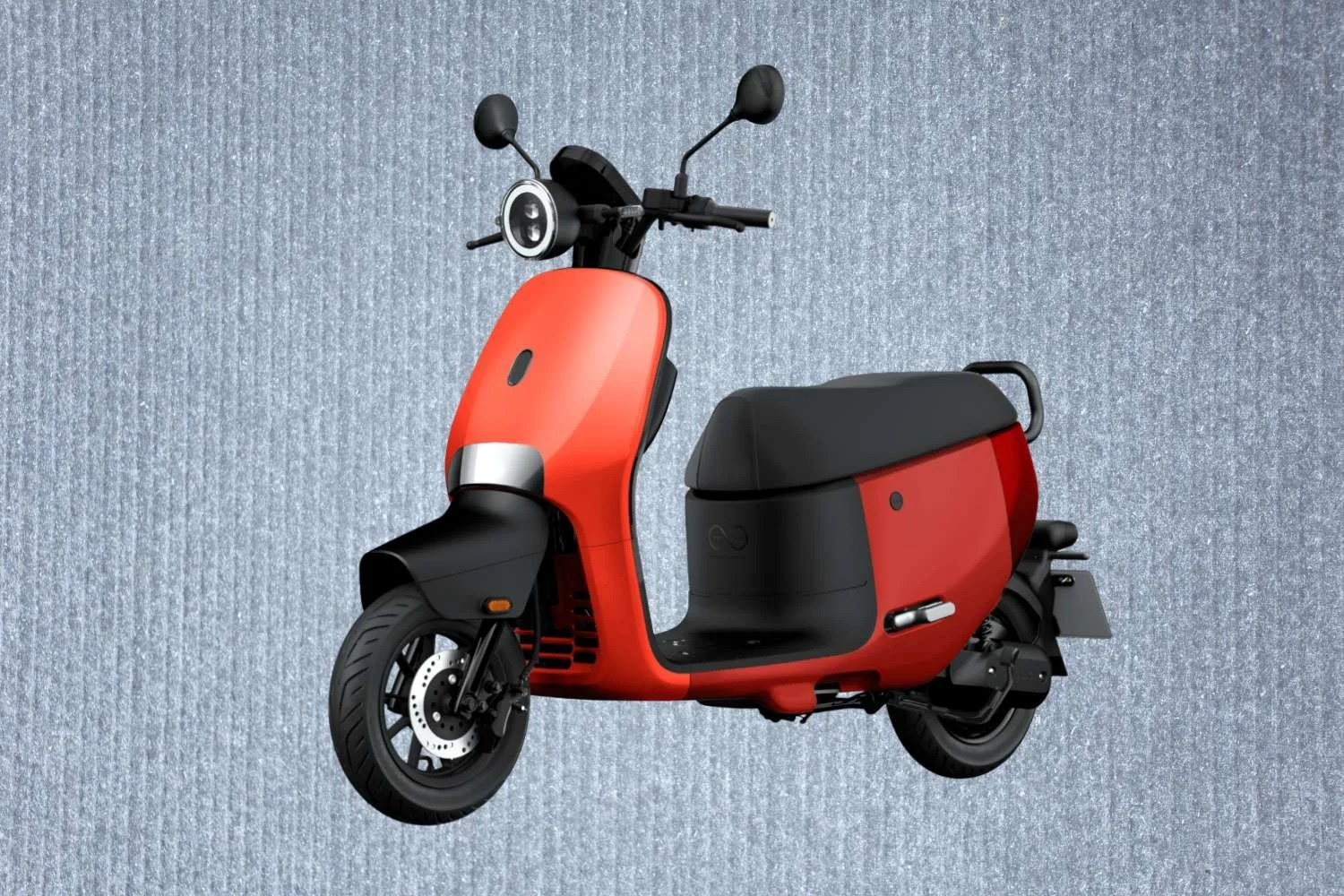
There is a certain kind of freedom that comes from moving through a city on your own terms. You no longer find yourself waiting on a delayed train or sitting in traffic, or even adjusting your pace to fit someone else’s schedule. There is simply direct, intentional, and uninterrupted movement. In cities where so much of daily life revolves around timing and urgency, the ability to move freely can feel surprisingly rare. The Gogoro JEGO is designed around that idea.
At its core, the JEGO is an electric scooter built specifically for urban life. It is compact, lightweight, and visually distinctive; it immediately separates itself from the traditional image of transportation. Unlike traditional scooters, which have often been treated as objects to get you from one place to another, the JEGO approaches movement differently. It feels designed not only around transportation itself, but around the people experiencing it.
Visually, the JEGO embraces a softer and more playful identity; rounded details and bold color choices give it a personality that feels intentional rather than industrial. The JEGO feels less like machinery and more like an extension of personal style. There is a subtle confidence in the design. It does not demand attention, but it naturally earns it. In many ways, it mirrors the evolution of cities themselves. Urban spaces increasingly blend functionality with individuality, and the objects people interact with every day are beginning to reflect that shift.
Yet beneath the visual appeal lies a larger conversation. Electric transportation has often been framed as a compromise: more sustainable, perhaps, but less exciting; more responsible, but less engaging and powerful. The JEGO quietly challenges that assumption. Rather than attempting to recreate the experience of a traditional gasoline scooter, it asks a different question entirely: what if transportation could evolve into something better?
One of its most notable features is the Eco-Speedy Hub Motor, designed to reduce maintenance needs. Traditional scooters often come with an invisible list of inconveniences: servicing appointments, mechanical wear, and the constant feeling that something eventually needs repairs. Ownership can sometimes feel as demanding as the transportation itself. The JEGO simplifies that experience through maintenance intervals that extend up to 5,000 kilometres and involve fewer moving parts. It removes many of the interruptions that traditionally accompany vehicle ownership, and becomes less about technical specifications and more about peace of mind.
That practicality becomes even more noticeable once the ride begins, with immediate yet smooth acceleration. There is no loud engine noise or vibration beneath your feet, and no sense of mechanical resistance fighting back against movement. Instead, there is a quietness to the experience that initially feels unfamiliar but quickly becomes one of its strongest qualities. It feels clean, effortless, and surprisingly calming.
Without the constant background noise associated with traditional engines, commuting begins to feel different. You start to notice more, and the city itself becomes more present; conversations drift from café patios as you wait at traffic light intersections. Instead of feeling separated from your surroundings, there is a stronger sense of connection and awareness.
Transportation starts to feel less transactional and more immersive. The JEGO is designed around shorter, everyday journeys: the kind of trips that quietly shape urban life, such as running errands, commuting to work, meeting friends across town, or taking an unexpected detour when something catches your attention. It is not designed around speed records or extremes. It is designed around removing friction from daily routines.
The JEGO’s personality contributes to that accessibility. The design feels welcoming rather than intimidating. There is an approachability to it that makes the experience feel less technical and more intuitive, even for first-time riders. What ultimately makes the JEGO compelling is not simply its technology or appearance. It is how naturally it fits into a larger shift already taking place.
Cities and the way people move through them are changing. Convenience is being redefined. Sustainability is becoming less about sacrifice and more about integration into everyday life. The JEGO feels less like a futuristic concept and more like a glimpse into what ordinary transportation may begin to look like.
Of course, it is not a universal solution. Weather, infrastructure, and personal preference will always influence how people choose to travel. For the right rider, in the right environment, the JEGO offers something increasingly valuable: control. Not control over where you are going, but control over how the journey itself feels.
Transportation has never really been about getting from one place to another. It has always been about the experience in between, and that is what the JEGO understands best. Through its low-maintenance design, smooth acceleration, and near-silent ride, it removes many of the small interruptions that often define commuting. It creates space for awareness rather than distraction and ease rather than effort.
The JEGO does not attempt to transform movement through dramatic reinvention. Instead, it improves the details that quietly shape everyday life. The JEGO feels less like a vehicle and more like an experience, not because it promises some distant future, but because it improves the present.