

Dwelling: The Alessi Plissé Kettle And The Rise Of Sculptural Appliances
For much of modern history, household appliances have been designed with a singular objective: function. They were objects intended to perform a task efficiently before fading quietly into the background. Toasters disappeared into cupboards. Kettles sat unnoticed in kitchen corners. Coffee makers were judged by performance rather than appearance. Utility came first, aesthetics second.
That hierarchy is increasingly changing as homes become more curated and design-conscious. These objects, which we once considered purely practical, are now expected to contribute to a space’s visual identity. Appliances are no longer hidden away. They sit proudly on countertops, open shelving, and kitchen islands. In many homes, they have become part of the décor. Few products embody this shift as successfully as the Alessi Plissé Kettle, bringing together beauty and purpose in a way that makes even the simplest daily ritual feel more considered.
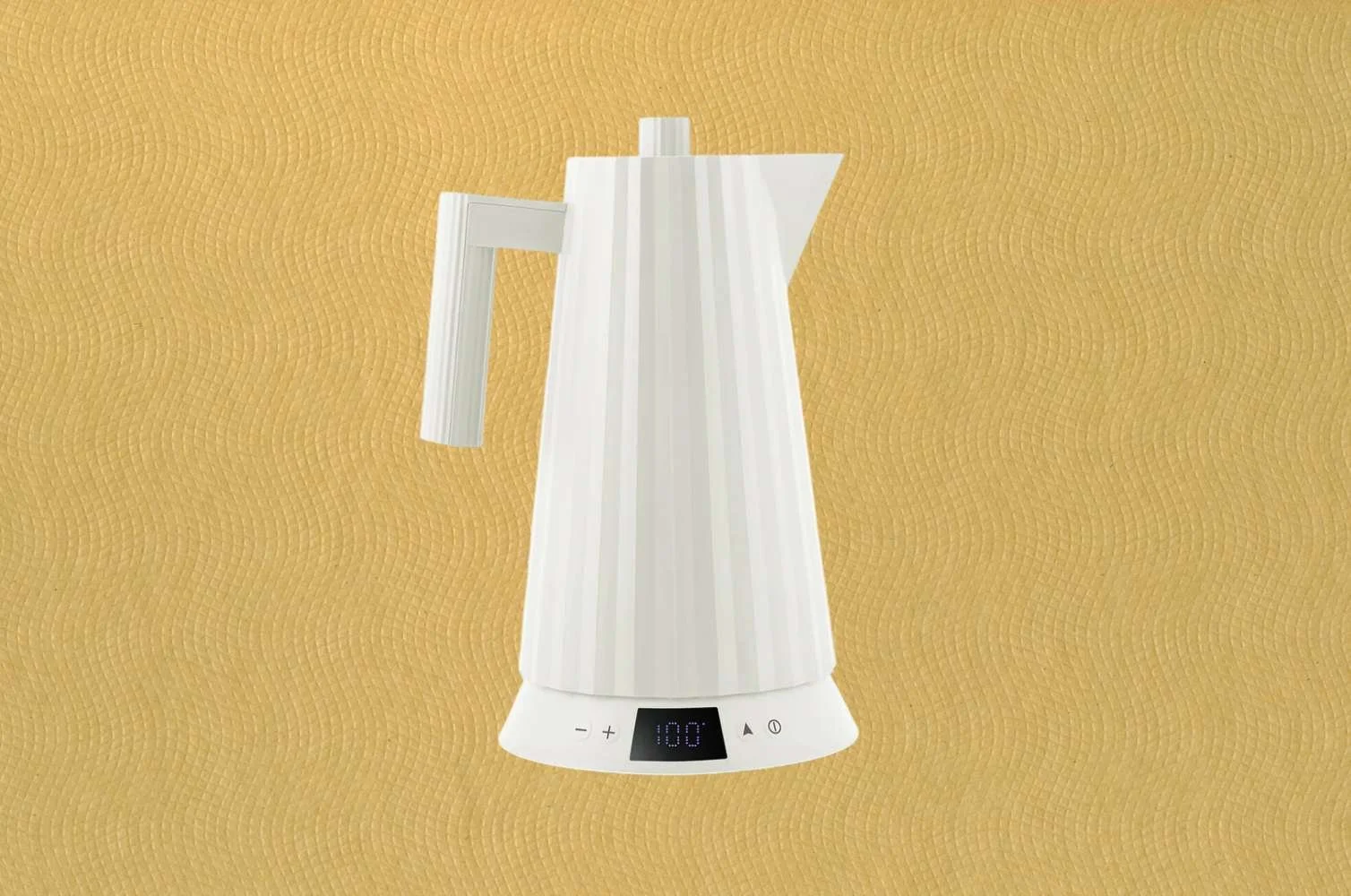
Designed by Italian architect Michele De Lucchi, the kettle blurs the boundary between household appliance and sculptural object. Its distinctive pleated exterior immediately separates it from the sea of stainless-steel cylinders and minimalist boxes that dominate the market. Inspired by the folds of haute couture fabric, the kettle differs from the conventional kitchen appliance, resembling a carefully draped garment. The design draws directly from the concept of plissé—the French term for pleating—a technique long associated with fashion and craftsmanship.
What makes the kettle particularly interesting is not simply its appearance but what that appearance represents. The Plissé Kettle arrives from a design tradition that has long treated everyday objects as opportunities for artistic expression. Alessi has spent decades collaborating with architects, artists, and industrial designers to create products that sit somewhere between functional object and collectible design piece. The Plissé Kettle continues that philosophy, transforming one of the most ordinary items in the home into something worthy of display. It serves as a reminder that beauty and functionality do not have to exist in separate categories, but can enrich everyday life together.
The pleated form itself is surprisingly architectural. Rather than existing as decorative surface detail, the folds create rhythm and structure across the kettle’s body. The result feels almost like a miniature building sitting on a countertop. This architectural quality is hardly surprising given De Lucchi’s background. Throughout his career, he has approached design through a lens that balances functionality with sculpture, often drawing inspiration from both craftsmanship and built environments.
Yet the popularity of the Plissé Kettle speaks to a broader cultural movement. Consumers are increasingly drawn toward products that offer personality alongside practicality. The rise of social media interiors, open-plan living, and carefully curated kitchens has encouraged people to think differently about the objects they use every day. A kettle is no longer simply a tool for boiling water. It becomes part of a home’s visual language. Choosing an object like the Plissé Kettle is as much about creating a home that reflects your personality as it is about making a cup of tea.
This shift mirrors developments elsewhere in contemporary design. Speakers are designed to resemble artworks. Air purifiers mimic sculptural furniture. Lamps increasingly blur the line between lighting and installation pieces. The expectation is no longer that functional objects should disappear. Instead, they are invited to participate in the aesthetic experience of a room.
The Plissé Kettle embodies this idea particularly well. It never sacrifices practicality in pursuit of style. Instead, it enhances one of the simplest moments of the day. Whether you’re making your first coffee before work or preparing tea to unwind in the evening, the experience feels more intentional when the object itself has been thoughtfully designed. It’s a small reminder that even everyday routines deserve a touch of beauty.
There is also something refreshingly optimistic about the design. The pleated surface introduces movement and texture into a space often dominated by smooth, flat materials. Kitchens are frequently filled with hard edges, reflective metals, and neutral surfaces. The kettle softens that environment. It introduces a sense of playfulness without becoming whimsical and elegance without becoming precious. Its sculptural form catches the light, invites conversation, and quietly transforms a functional corner of the kitchen into something worth admiring every day.
Perhaps that explains why the Plissé Kettle has become more than simply another appliance. It reflects a growing belief that everyday objects deserve thoughtful design because they shape the routines we repeat every single day. Beauty should not be reserved solely for galleries, luxury furniture, or statement architecture. It can exist in the items we reach for every morning before we’ve even had our first cup of coffee. Investing in thoughtful design isn’t simply about owning something beautiful—it’s about making everyday life feel just a little more enjoyable.
Good design often succeeds not because it reinvents an object, but because it changes how we see it. The Alessi Plissé Kettle does exactly that. It transforms a routine household appliance into something sculptural, expressive, and unexpectedly joyful. In an era where our homes increasingly serve as reflections of personal identity, that feels like a natural evolution rather than a luxury.