

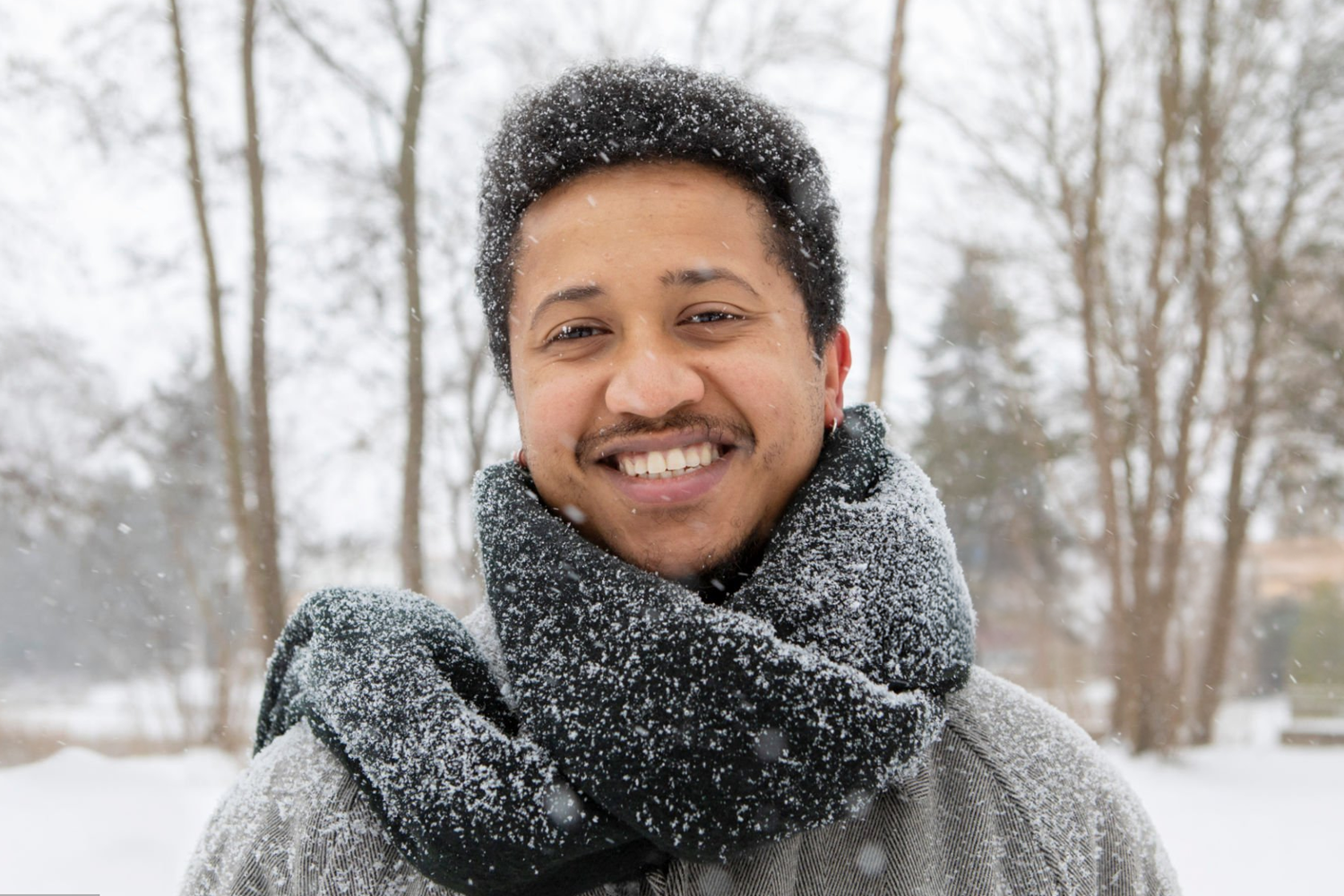
Westend61
There is a particular betrayal that happens every December: you spend twenty minutes perfecting your curl definition or fade, throw on a knit beanie to survive the morning commute, and by lunchtime, your hair looks like a static-charged halo of frizz and flaking scalp skin.
For men with coils, kinks, and tight curls (Types 3 and 4 hair), winter is less of a season and more of a structural threat. Because the elliptical shape of the hair shaft prevents natural sebum from traveling down the strand, textured hair is inherently prone to dryness. Pair frigid, low-humidity outdoor air with moisture-stripping indoor heating—and cap it all off with abrasive wool—and you have the exact recipe for hygral fatigue, mechanical breakage, and winter dandruff.
Surviving the drop in temperature does not require a twelve-step bathroom takeover. It requires a streamlined, barrier-first defense strategy that seals hydration in and keeps friction out.
1. Upgrade Your Headwear: The Satin-Lined Mandate
The biggest culprit behind winter crown breakage is not the cold itself—it is the fabric sitting directly on top of your head. Standard cotton, acrylic, and wool beanies act like microscopic Velcro, snagging raised hair cuticles while simultaneously wicking away precious moisture from the hair shaft.
Trading standard knits for satin- or silk-lined beanies is non-negotiable. The smooth interior lining eliminates mechanical friction, preserving curl patterns and preventing single-strand knots around the crown and nape. If you already own a collection of favorite winter hats, slipping a thin satin skullcap or durag underneath provides the exact same structural protection without sacrificing your personal style.
2. Swap Lightweight Gels for Moisture-Locking Creams
Water-based gels and lightweight foams that deliver effortless hold in July often turn brittle and flaky when the dew point drops. Cold air demands heavier occlusives and emollients to slow down transepidermal water loss from the hair fiber.
Streamline your wash-and-go or twist routine using a modified LCO (Liquid, Cream, Oil) method:
Liquid: Start with damp hair or a hydrating leave-in mist containing humectants like aloe vera or panthenol—avoiding heavy glycerin in sub-freezing climates, as it can pull moisture out of the hair when ambient humidity is near zero.
Cream: Layer on a rich, butter-based styling cream (look for shea butter, mango butter, or ceramides) to coat the cuticle and provide soft, touchable definition.
Oil: Seal the ends with a few drops of lightweight jojoba, argan, or squalane oil to lock hydration inside the cortex all day.
3. Treat the Scalp Like Facial Skin
Winter flaking is frequently misdiagnosed as dry scalp, prompting men to pile on heavy greases that only suffocate follicles. In reality, cold-weather irritation is often a compromised skin barrier or mild seborrheic dermatitis triggered by dry indoor heat and infrequent washing.
Instead of skipping wash day, keep a consistent bi-weekly or weekly cleansing cadence using a sulfate-free moisturizing shampoo. Follow up with a targeted, lightweight scalp serum formulated with salicylic acid to gently dissolve dead skin buildup, or niacinamide and tea tree to calm inflammation without leaving a greasy residue under your hat.
4. Master Low-Manipulation Cold-Weather Styling
Winter is not the season for daily wet styling or aggressive detangling. Cold, dry strands lack elasticity and snap easily under tension. Lean into low-manipulation protective styles—such as two-strand twists, neat cornrows, or a well-moisturized tapered afro—that keep ends tucked away and minimize daily combing. Always detangle in the shower with plenty of slip from a thick conditioner, working gently from ends to roots.
By pairing smart fabric choices with occlusive moisture layering, your hair stays resilient, defined, and flake-free until spring.
