

The Barbershop As The Last Unfiltered Space For Men
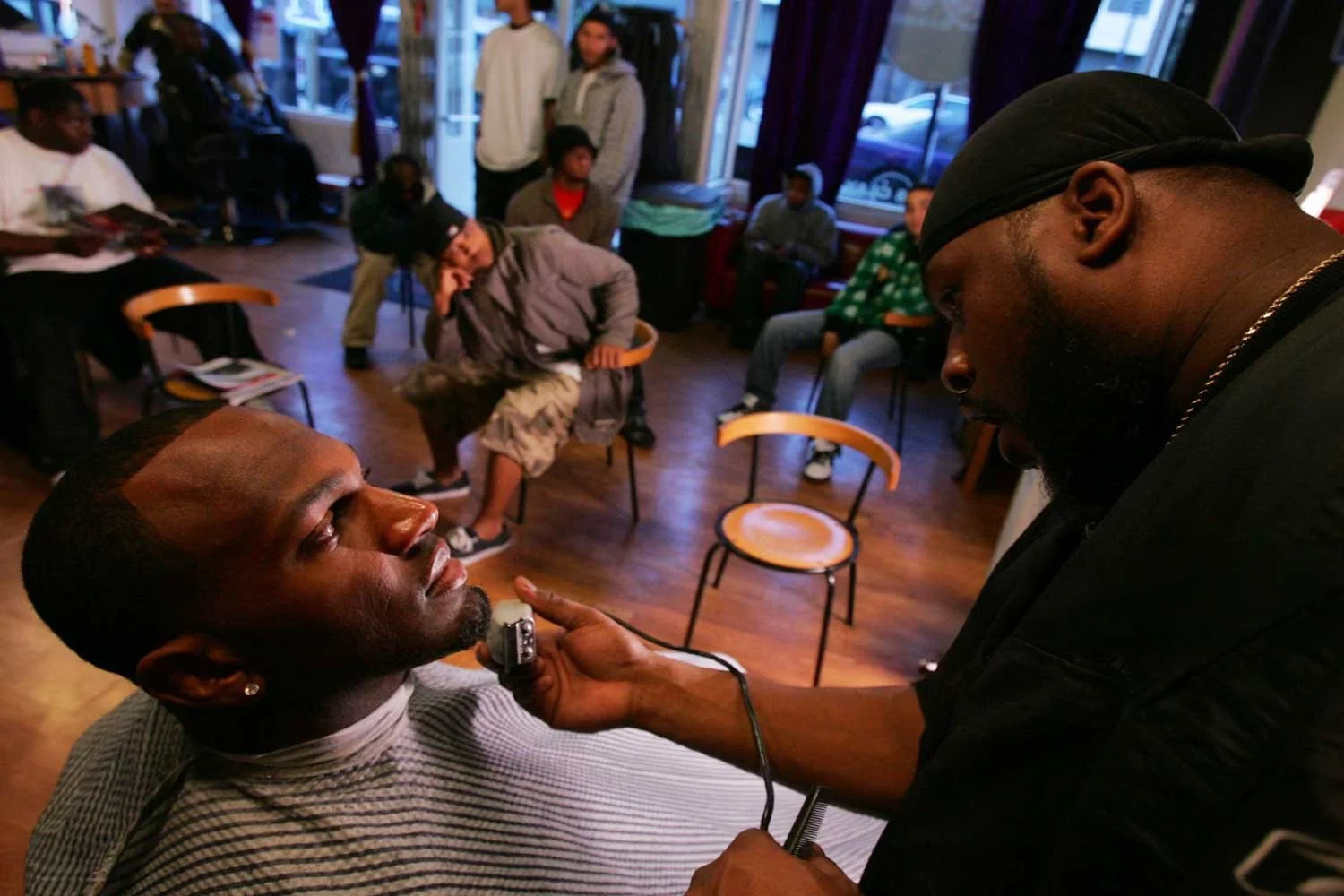
Sporting News Archive
During the Enlightenment, there were places to exchange ideas, to debate, to argue, and to learn. They were called salons. Although the average salon has a different connotation now, it doesn’t change the fact that, just like salons, barbershops are places to mingle that have long been associated with active conversational spaces. What does that mean? It simply means that salons and barbershops are among the last third places that foster intimate discussion. Instead, the average person now goes to Reddit with their woes, but something hard to hear and face-to-face might be the only thing that keeps the average man together.
Erasure Of Talking Spaces
As bars, clubs, and community halls thin out, the barbershop is quietly doing a few other things: getting men to talk. As COVID wreaked havoc on third spaces and the ability to socialize, we noticed that the place with the clippers, the cape, the mirror, and the hum of the TV is perhaps the best place for unplanned conversations.
Ray Oldenburg’s “third place” is defined as a space that is neither home nor work, where community happens informally. Think of a school library or a coffee shop where people aren’t just in and out. Now there is an erosion of these spaces, and we are experiencing a shrinking of congregations, perhaps correlating with the rise of remote work, friendships migrating to group chats, and much more.
Perhaps the classic barbershop, an idea that is riddled with nostalgia and vintage glamour, is the last surviving place where men can regularly show up with no agenda and stay long enough to talk, with perhaps the certainty and safety that they might not see the people they spill these deep, dark secrets to again, or at least not for a very long time.
It is one of the few socially accepted forms of non-sexual touch for men: hands on the head, the neck, and the jaw. It is low stakes and high trust. Your barber isn’t family, a boss, or a friend of a friend, and what’s said stays in the chair. With a captive time of 30 to 45 minutes and nowhere to be, it offers a form of solace you otherwise won’t get in a third space like church or, worse, group chats.
POC Communites
Barbershops are community anchors, especially in Black communities, where they’ve long been forums for politics, news, and advice. With modern evolution, barbers now field questions about skin, hair loss, anxiety, sleep, and self-image alongside style choices. Real-world examples include the Confess Project, which trains barbers in mental health advocacy. This also comes from published research on barbershop-based health programs. And although it is an unofficial title, a barber is part stylist, part confidant, and part first responder.
In a digital contrast, beauty and grooming advice has gone algorithmic, with TikTok and influencers acting as the primary product pushers rather than educators. It’s performative, and it’s always meant to sell something. When you’re in the chair, face-to-face, it’s personal and answerable. It is a rare, unfiltered source of self-image feedback that the average person can get without anything to monetize in that moment.
It gets complicated because barbers are not clinicians, and informal support cannot replace professional care. Burnout is also real: emotional labor with no training or compensation for dealing with these types of conversations. The average barber might seem like a superhero, but secretly they could become fatigued by it.
A fresh cut offers visible results, but the conversation may be the real service. It might be interesting to see how the man feels when he gets out of the chair, looks in the mirror, and looks or feels a little bit lighter
