

Elegance Doctrine: Is The Effortless Look A Curated Tactic?
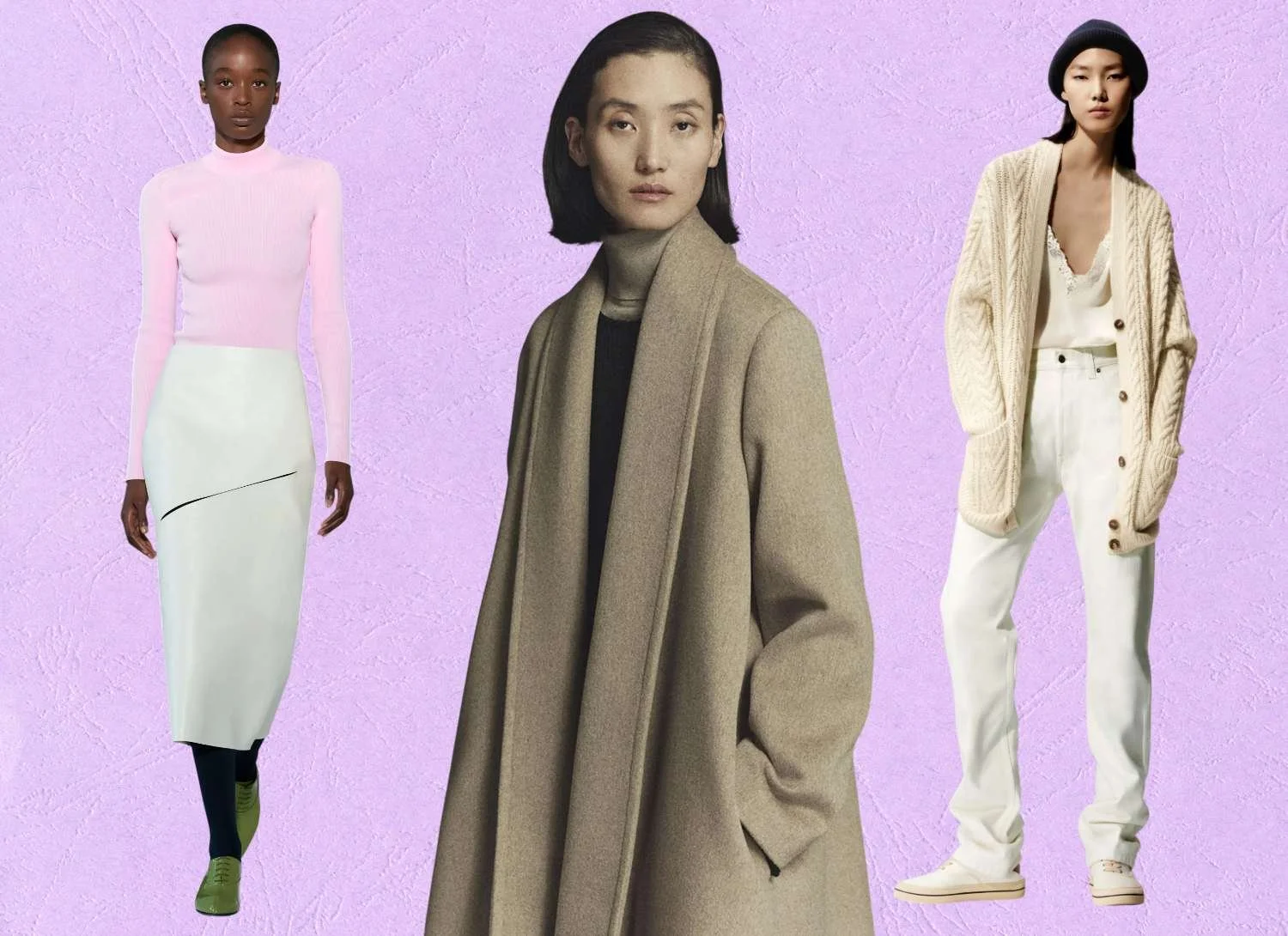
From left to right: Jil Sanders, the row, and Loro Piana
The trend of quiet luxury has come and gone. Where street fashion was once dominated by large, visible logos, now a toned-down, effortlessly chic look is trending. But is this carefree “elegance ease” really as simple as it seems?
Born out of the standard trend cycle in fashion, social media influence, and economic shifts, trends like quiet luxury have recently reached their peak. The aesthetic, in essence, revolves around prioritizing well-made, oftentimes designer pieces that don’t announce luxury through an oversized logo. The goal is to combine these pieces into a look that reads as something smooth and uncomplicated, yet always chic.
The Fashion Pendulum
There is an industry understanding of fashion as a pendulum. If maxi skirts were trending at one point, the pendulum would begin to swing the opposite direction until mini skirts were the popular length. The idea of this concept is that there is a cultural or economic change that sparks a consumer hunger for the opposite end of the spectrum. Along with the long-standing notion that trends cycle every twenty years (which is now more like ten in the era of fast fashion), the pendulum helps to forecast what might be trending in the near future based on previous trends.
The maximalist era that emerged between 2015-2022 was driven by Gen Z’s need for loud self-expression. Much like the surge of visible body modifications during this window, including noticeable implants and lip filler, the years between 2022-2024 marked the rise and peak of the opposite of this pendulum, leading to quiet, understated luxury and natural looks. In 2026, we are still at the peak of this swing, and will slowly make our way back down over the course of the next few years.
Fast-fashion Fatigue
Having style influencers in the form of TikTok, Instagram, and Pinterest overloading one’s feed can cause a phenomenon known as digital burnout. During the COVID-19 lockdown, influencers fueled their content through massive fast-fashion hauls, pushing the idea of different aesthetic “cores” like cottage-core, gorp-core, or even clown-core, each promoting expression within a predetermined niches.
In addition to the overwhelming influx of social media personalities pushing new content daily, studies show that the new generation values sustainability above almost all else when shopping. In terms of luxury, this may indicate that young consumers making designer purchases are considering the longevity of a piece more than before. This can take the form of choosing something more classic and not simply a trend, something quieter that can be worn with many different looks, or prioritizing natural materials built to last.
Cultural & Economic Shifts
Economic uncertainty also shapes what consumers choose to purchase and wear in terms of luxury fashion. According to Fashionista, there is a tendency for consumers to feel shame surrounding flashy luxury purchases in moments of economic instability, leading them to opt for more subtle and wearable pieces. This ties into a general lack of disposable income in the current American economy, encouraging shoppers to consider any new luxury purchase before committing to it, and to choose pieces that are a timeless investment rather than a fleeting trend.
Brands at the forefront of the quiet luxury movement include The Row, Loro Piana, and Jill Sander, all of which offer luxury materials, silhouettes, and price tags without the notable branding. Instead of carrying something instantly recognizable like an Hermes Birkin or Gucci Jackie, shopping these brands gains obvious quality without overt branding, which consumers in this economic landscape may consider a more tasteful approach to luxury.
Does Quiet Luxury Kill individuality?
Much like the TikTok “core” approach to dressing, aesthetic trends often highlight specific pieces or styling techniques required to replicate the look. Take the “Scandi-uniform” for example. This aesthetic is currently trending on Pinterest and TikTok, meant to replicate the ease and simplicity of a romanticised Western European culture. Recreating the look often involves basic tees or tanks layered with a boxy cardigan, slightly oversized straight-leg denim, or wide-leg linen pants for the summer, flip-flops, or plain leather sneakers. A key ingredient also lies in with hair and makeup styling, which usually involves Scandinavian-inspired sun-kissed highlights, dewy, natural skin, and slightly pink cheeks and lips.
The fear when a trend like this emerges is that it can lead to homogenous dressing and an erasure of individuality. While effortless luxury is built to last, and even combats the previous conception of the fashion pendulum by prioritizing well-made basics that can be worn and reworn, fast-fashion and social media’s appropriation is a threat to the trend’s natural sustainability as well as an individual’s unique, personal sense of style by requiring specific curation for the trend to read as effortless, working against the inherent values of the aesthetic itself.
How to Make Effortlessness Work for You
Like any aesthetic trend, quiet luxury has had its rise and fall in women’s fashion alongside economic patterns. The truly effortless look can be curated by prioritizing comfortable clothing that moves and works with your body, choosing flowing or more relaxed silhouettes, and resisting the urge to overcomplicate an outfit to perfectly fit a meticulously curated aesthetic.
The heart of this kind of dressing, effortless, quiet, luxurious, lies in following the cultural and aesthetic shifts of modern world while keeping individual likes and dislikes in mind, along with a socially conscious perspective. Prioritizing comfort and ease of wear, alongside personal style and the ability to rewear and mix pieces, is what keeps the effortless look, well, effortless.
