

Ride Report: Weightless Movement: The Utopia Carbon E-Bike And the Future of Urban Mobility
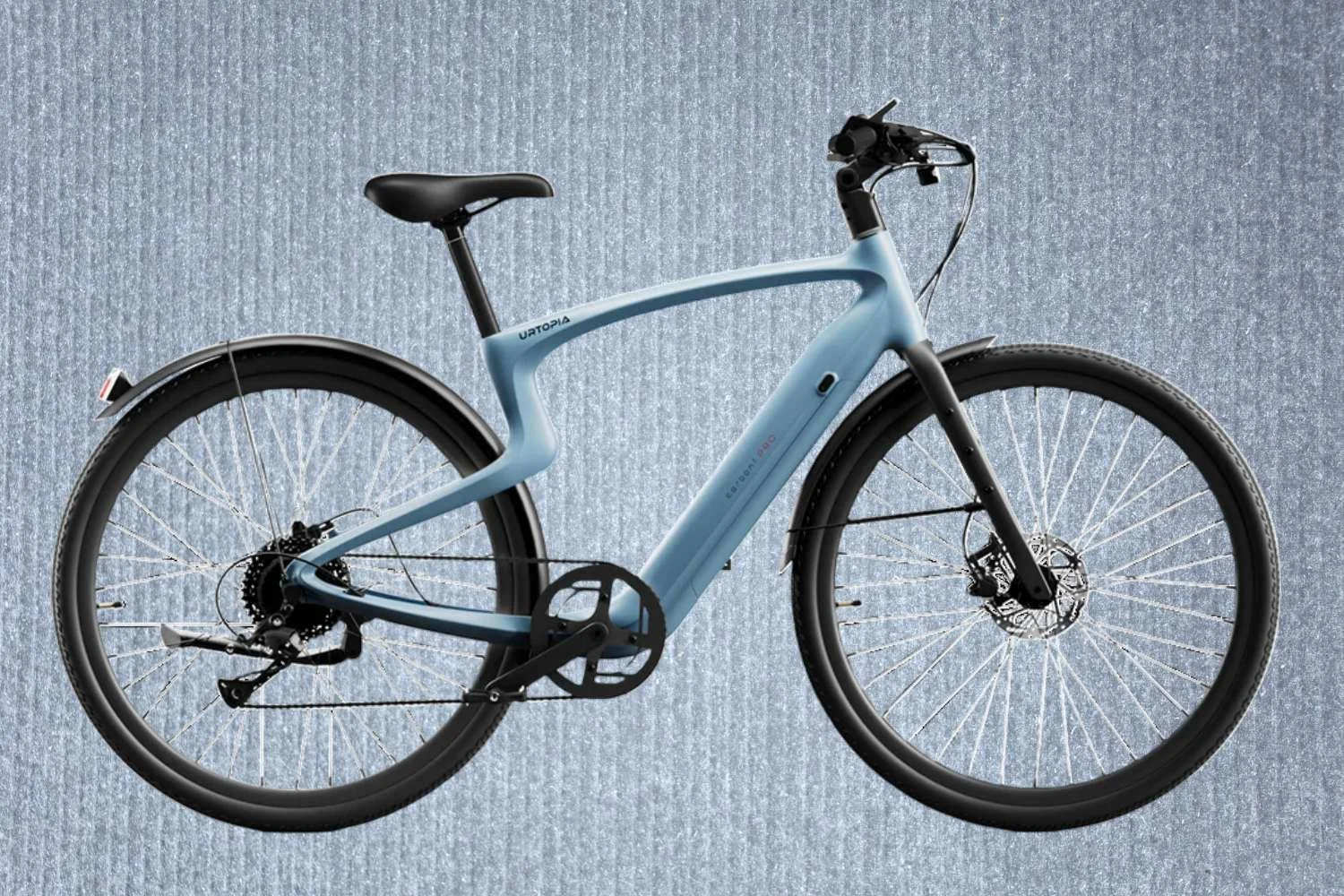
There’s a particular frustration that comes with carrying something that promises freedom, yet somehow still holds heaviness. Anyone who has ever dragged a bicycle up a fourth-floor walk-up, wrestled an e-bike into a subway elevator, or maneuvered one through a narrow apartment hallway understands the feeling. Movement, ironically, can come with a surprising amount of resistance.
For many urban professionals, that resistance appears before they even begin their day. It’s 8:15 on a weekday morning. A train delay notification flashes across your phone. The platform is already crowded. Rideshare prices have surged. What should be a twenty-minute commute is suddenly approaching an hour. Modern city life often feels like a constant negotiation between convenience and inconvenience, speed and delay, freedom and dependence.
For years, electric bikes solved one problem while creating another. They made commuting easier, faster, and less physically demanding, but they often arrived with a trade-off: bulk. Heavy frames, oversized batteries, and a feeling that you were riding something closer to a machine than a bicycle. The Urtopia Carbon E-Bike is built in response to that tension.
At first glance, it feels less like a traditional e-bike and more like an object from a near future where transportation has become lighter, cleaner, and almost invisible. Its frame curves with an unusually sleek silhouette, and much of that comes from its carbon fiber construction: a material choice that significantly reduces weight while maintaining strength and durability. Urtopia’s carbon models are designed around lightweight construction, with some versions weighing in around the mid-30-pound range, far lighter than many conventional electric bikes. It is weight that changes behaviour, and you notice that difference immediately.
Traditional e-bikes often create their own ecosystem. They require heavy-duty racks, dedicated storage spaces, and careful planning. Their convenience occasionally disappears the moment you need to lift them. Lightweight design changes that equation entirely. Suddenly carrying a bike upstairs no longer feels like a workout. Taking it through a city becomes easier. The line between transportation and everyday life starts to blur.
That shift matters more than it initially seems. Because increasingly, urban mobility isn’t simply about speed. It’s about friction. Or more accurately, reducing it. Modern commuting already demands constant negotiation: delayed trains, crowded platforms, traffic, changing routes, and unpredictable schedules create countless tiny inconveniences throughout the day. The most successful transportation products increasingly focus not on getting somewhere dramatically faster, but on making movement feel even smoother. The Urtopia appears designed around that idea.
Beyond the lightweight frame, the bike integrates smart features that make it feel closer to a piece of consumer technology than a traditional bicycle. Models include connected features such as GPS, app integration, voice functionality, route planning, and built-in connectivity systems intended to create a more personalized riding experience.
The result feels surprisingly familiar, not because it resembles a bike, but because it resembles modern expectations.
We’ve become accustomed to products adapting to us. Phones anticipate directions before we ask, while algorithms learn preferences, and technology increasingly removes steps, rather than adding them. The Urtopia applies that same philosophy to transportation.
Movement becomes less mechanical and more intuitive. This product reflects changing expectations around mobility itself. Transportation is no longer viewed solely as infrastructure or necessity. Increasingly, it exists as an extension of lifestyle. People do not simply want vehicles; they want experiences.
That evolution is visible in the way people move through cities today. More commuters are choosing options that offer flexibility over fixed schedules and autonomy over dependency. The appeal of an e-bike is not simply that it can be faster than public transportation in some situations. It is that it places control back into the hands of the rider.
An e-bike occupies an unusual middle ground. One that is faster than walking, more flexible than public transit, and less restrictive than driving. It creates a level of autonomy that feels particularly valuable in cities where movement often depends on systems outside your control. The Urtopia looks to simply refine that experience.
Of course, no product arrives without compromises. Lightweight construction often comes at a premium cost, and smart features occasionally risk becoming distractions rather than conveniences. Technology can age faster than physical design, and software updates can feel temporary in ways steel frames do not.
Urtopia is designed to serve. The value proposition is not simply transportation; it is time, convenience, and reduced friction. It is arriving at work without squeezing into a crowded subway car. It is making a quick trip across town without checking train schedules. It is being able to leave the office, meet friends for dinner, run errands, or explore a neighborhood without planning your evening around transit schedules. In cities like New York, where movement shapes nearly every aspect of daily life, small improvements to commuting can create meaningful improvements to quality of life.
For years, the future of transportation was imagined through bigger ideas: flying cars, hyperloops, and dramatic reinventions of cities themselves. Yet, the future may be arriving more quietly. It may look like a lighter frame carried effortlessly up a flight of stairs. It may feel like skipping a crowded platform during rush hour. It may mean choosing your own route instead of following someone else’s timetable. It may simply be the ability to move through a city with greater ease.
The Urtopia Carbon E-Bike does not attempt to reinvent transportation. Instead, it focuses on something more practical: improving the everyday experience of getting from one place to another. In a world where convenience, flexibility, and efficiency increasingly define how people live and work, that may be exactly the innovation urban mobility needs.