

Ride Report: Brompton Electric And The Folding Future Of Cities
Cities have always shaped the way we move, from horse-drawn carriages to underground railways and electric vehicles. Every generation has introduced a new solution to the same challenge: how to travel efficiently through increasingly crowded urban spaces. Today, as cities become denser and sustainability takes center stage, a different kind of innovation is quietly transforming urban transportation. Rather than building larger vehicles or wider roads, designers are asking a simpler question: what if mobility could fold away?
Few products answer that question as elegantly as the Brompton Electric. At first glance, it resembles the iconic folding bicycle that has become synonymous with city living. Compact, practical, and instantly recognizable, it carries over four decades of thoughtful engineering. Hidden within that familiar silhouette, however, is an electric motor that expands how far and how effortlessly riders can travel without sacrificing the portability that made Brompton famous.
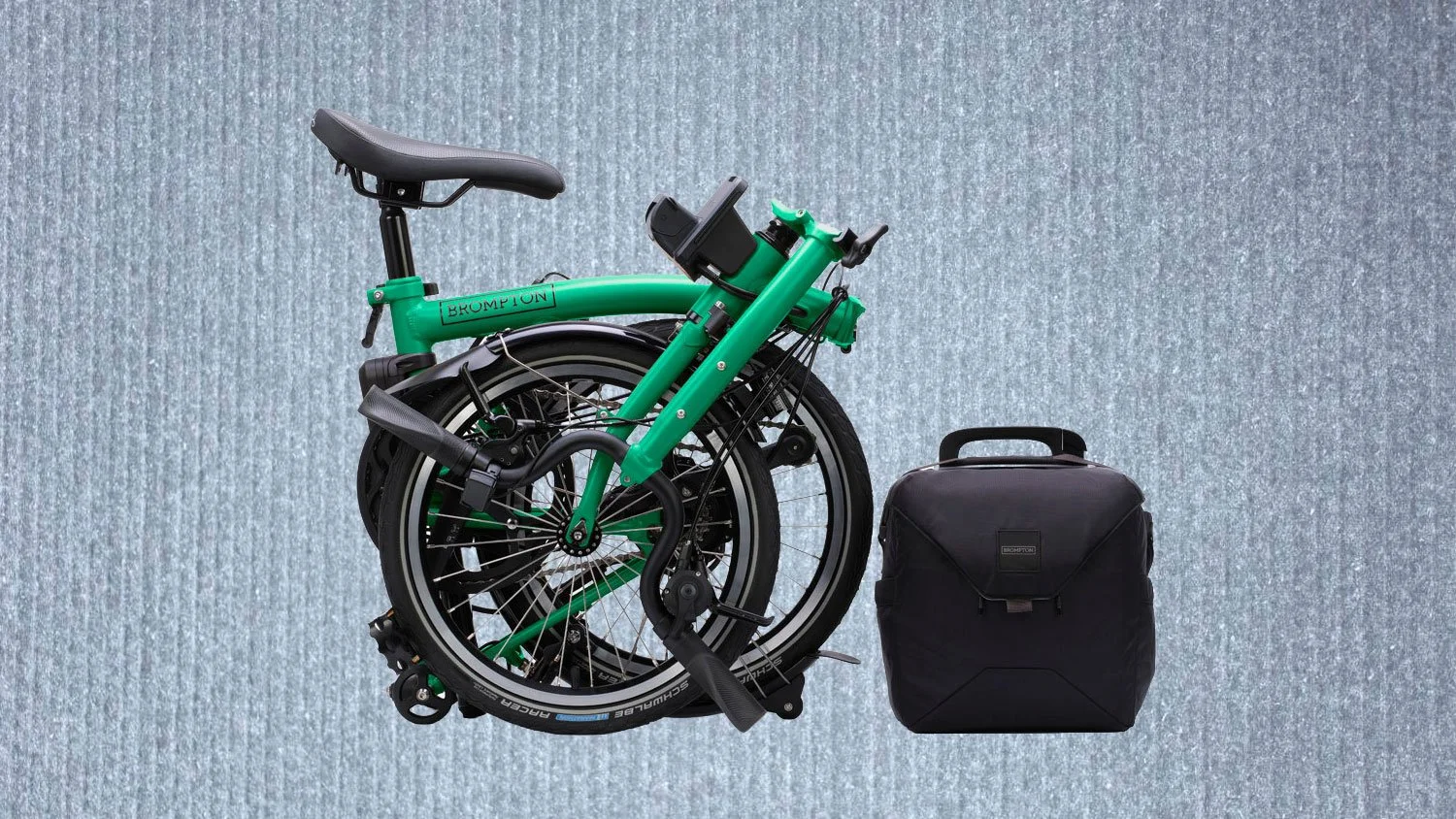
The brilliance of the Brompton Electric lies not simply in its battery-powered assistance, but in its ability to solve multiple urban challenges simultaneously. Traditional bicycles offer freedom, but can be awkward to store in apartments, offices, or carry with you onto public transportation. Electric bikes often solve the effort required for commuting, yet their larger frames make them heavier and less practical once the ride is over. Brompton bridges that gap by creating an e-bike that folds into a remarkably compact package in seconds.
That compact design reflects a broader philosophy of modern urban living. As apartments become smaller and city life increasingly revolves around flexibility, products are expected to perform multiple functions without demanding additional space. Furniture transforms into storage. Dining tables become workstations. Technology disappears into minimalist interiors. The Brompton Electric fits naturally into this way of thinking, offering full-scale transportation that occupies surprisingly little room when folded.
Its engineering is equally impressive. The electric assistance provides a smooth boost when climbing hills, accelerating from traffic lights, or covering longer distances that might otherwise require a taxi or subway journey. Yet unlike many electric bikes, the experience remains distinctly bicycle-like. Riders continue to pedal, engage with their surroundings, and enjoy the rhythm of city streets while benefiting from discreet assistance when it’s needed most.
The design itself has become something of an icon. Handmade in London, Brompton bicycles have earned a loyal following thanks to their instantly recognizable folding frame and meticulous craftsmanship. The Electric version preserves that heritage while embracing the future. Rather than radically reinventing the bicycle, it builds thoughtfully upon an already celebrated design, proving that innovation often comes through refinement rather than complete reinvention.
The Brompton Electric provides an undeniable lifestyle appeal. It feels perfectly suited to the rhythm of contemporary cities, where a morning commute may begin with cycling through tree-lined streets, and then folding a bike to travel easily, as you board a train. Lunch meetings become easier without worrying about bike parking. Weekend adventures can stretch further without concern for steep hills or tired legs. The bicycle adapts to the city rather than forcing the rider to adapt to the bicycle.
This reflects a larger shift in how we think about transportation. Increasingly, people are moving away from relying on a single method of travel and instead combining walking, cycling, trains, buses, and ride-sharing throughout the day. The Brompton Electric embraces this multimodal future by fitting seamlessly into each stage of the journey. Its portability makes transitions between different forms of transport remarkably effortless.
Sustainability also plays an important role in its growing popularity. As cities seek to reduce congestion and lower emissions, bicycles have become an increasingly attractive alternative to short car journeys. Electric assistance broadens that appeal by making cycling accessible to a wider range of people, regardless of age, fitness level, or commute distance. In doing so, the Brompton Electric demonstrates that environmentally conscious choices need not come at the expense of comfort or convenience.
Perhaps that is why the Brompton Electric has become more than simply another bicycle. It represents a different vision for urban mobility, where transportation feels flexible, is beautifully engineered, and is designed around the realities of modern city life. It recognizes that the future of cities is unlikely to depend on one revolutionary invention, but rather on thoughtful products that quietly make everyday life easier.
Good design often succeeds by solving problems so elegantly that the solution feels obvious in hindsight. The Brompton Electric achieves exactly that. It combines timeless engineering with contemporary technology to create a bicycle that folds effortlessly into the pace of city living. In an era where space is limited, time is valuable, and sustainability matters more than ever, it offers a compelling glimpse into the folding future of our cities.