

Futurist: PLAUD Note And The Future Of Memory
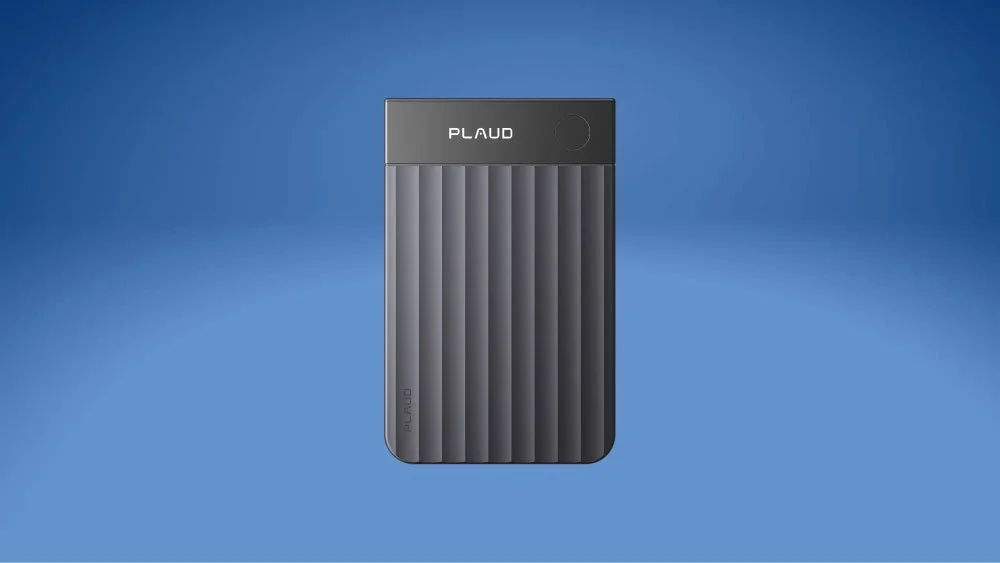
There was a time when remembering something depended entirely on ourselves. We scribbled notes on scraps of paper, highlighted books, filled notebooks with ideas, or hoped important conversations would simply stay with us. Memory was personal, imperfect, and often fleeting. Today, technology is quietly redefining what it means to remember.
Few products capture this shift quite like the PLAUD Note. At first glance, it appears remarkably understated. Slim enough to slip into a wallet, notebook, or phone case, it carries none of the visual complexity typically associated with advanced technology. Yet beneath its minimalist exterior lies a device capable of recording conversations, transcribing speech, and using artificial intelligence to organize information into summaries and searchable notes. It is less a voice recorder than a personal memory companion.
The appeal of the PLAUD Note extends beyond convenience. It represents a growing desire to reduce the mental burden of having to remember every detail ourselves. Meetings, lectures, interviews, brainstorming sessions, and everyday conversations often move faster than we can write. Important ideas disappear while we’re still trying to capture the previous sentence. The PLAUD Note removes that pressure, allowing users to remain fully present in the conversation, rather than dividing their attention between listening and note-taking.
This marks an evolution in the relationship between technology and productivity. For years, digital tools focused on helping us store information: cloud drives archived documents, note-taking apps collected thoughts, and calendar applications reminded us where to be. The newest generation of AI-powered devices goes a step further. Rather than simply storing information, they begin to interpret it, organize it, and present it back in a format that feels immediately useful.
The PLAUD Note reflects this transition beautifully. After recording a conversation, it can generate transcripts, identify key discussion points, create summaries, and extract action items within minutes. What once required hours of reviewing recordings and manually organizing notes becomes almost instantaneous. The technology quietly disappears into the background, leaving only the information that matters.
Perhaps what makes the device particularly compelling is its physical design. Unlike many modern gadgets that compete for attention through large screens and constant notifications, the PLAUD Note feels almost invisible. Its clean aluminum finish, slim profile, and understated appearance allow it to integrate naturally into everyday life. It doesn’t demand attention; it quietly supports it.
This philosophy mirrors a broader trend within contemporary product design. Increasingly, the most successful technology is becoming less visible rather than more. Consumers are gravitating toward products that blend seamlessly into their routines, rather than disrupting them. Smart home devices disappear into furniture, wireless chargers become decorative objects, and digital assistants fade into the background until they’re needed. The best technology often feels effortless. The PLAUD Note embodies this philosophy perfectly. It works quietly in the background, allowing users to stay fully present while ensuring every important conversation, idea, and insight is captured for later.
For journalists, students, researchers, and professionals, devices like the PLAUD Note offer something particularly valuable: the freedom to focus on listening. Interviews become natural when there is less pressure to capture every quotation by hand. Lectures can be absorbed when students engage with the discussion, rather than racing to write every slide, and even creative meetings become more collaborative when ideas are allowed to flow uninterrupted.
The significance of products like the PLAUD Note reaches beyond productivity alone. They raise fascinating questions about how we interact with our own memories. When artificial intelligence reliably organizes, searches, and retrieves our conversations, then memory itself becomes less about perfect recall and more about knowing where information lives. The human mind shifts away from storing every detail toward understanding, analyzing, and connecting ideas.
That may ultimately become the defining characteristic of this new generation of devices. They do not replace human memory. Instead, they extend it. They create a digital layer that preserves conversations, protects ideas from being forgotten, and allows us to revisit moments with remarkable accuracy. In doing so, they free us to spend less time worrying about remembering and more time thinking creatively.
Good design has always found ways to simplify everyday life. The PLAUD Note succeeds because it does so almost invisibly. By combining elegant industrial design with intelligent AI software, it solves one of our biggest modern challenges: remembering, organizing, and making sense of the constant flow of information we encounter every day. Rather than demanding our attention, it quietly supports it.
In an era where information moves faster than ever before, devices like the PLAUD Note demonstrate that the future of memory is not about remembering more—it is about remembering better. By recording conversations, generating accurate transcripts, organizing key points, and creating actionable summaries, it allows people to spend less time worrying about what they might forget and more time listening, thinking, and creating. Whether you’re a journalist conducting interviews, a student attending lectures, a researcher collecting information, or a professional managing meetings, the PLAUD Note transforms memory from something we struggle to preserve into something that works seamlessly in the background. As artificial intelligence continues to evolve, products like the PLAUD Note are redefining productivity—not by replacing human memory, but by extending it in ways that feel intuitive, practical, and almost invisible.