

Dwelling: Aarke Carbonator 3 And The Reinvention ofEveryday Rituals
The rituals that define a home are rarely extravagant ones. More often, they are the small actions repeated almost without thought: making coffee in the morning, opening the curtains, filling a glass with water, setting the table before dinner. Individually, they seem insignificant. Collectively, they create the rhythm of everyday life, and presently, good design is paying attention to those moments.
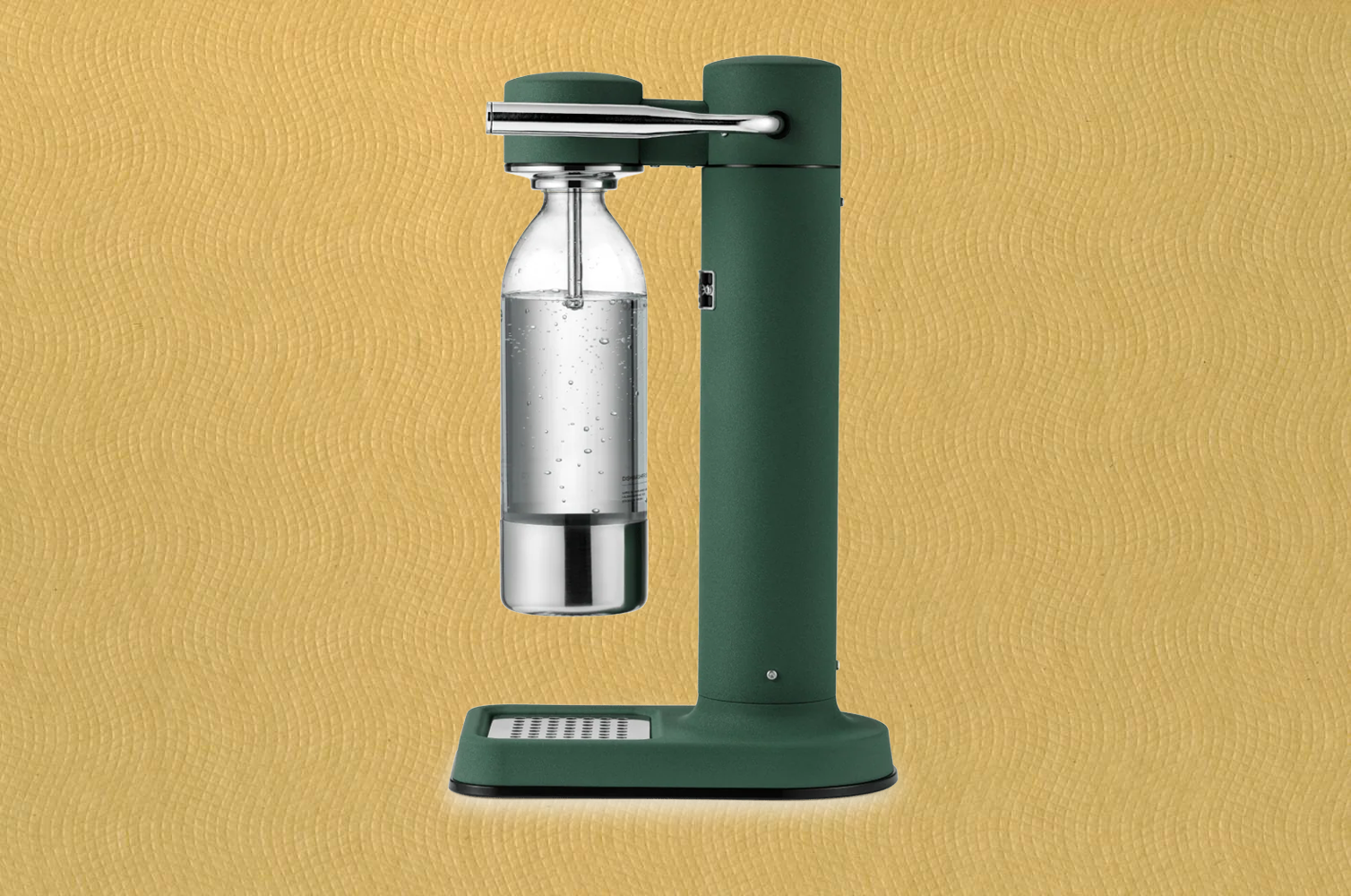
The Aarke Carbonator 3 is a particularly elegant example. At its most practical, it is simply a machine for turning still water into sparkling water. Its appeal lies in transforming that ordinary process into something that feels deliberate. With its sculptural stainless steel body, mechanical lever, and distinctly minimalist Scandinavian appearance, the Carbonator 3 turns an everyday kitchen function into a small ritual of its own.
Designed and engineered in Sweden, the Carbonator 3 rejects much of what we have come to expect from countertop appliances. There is no screen, no app, no charging cable, and no collection of illuminated buttons. In fact, the machine requires no electricity at all. Instead, a CO2 cylinder and a physical lever provide everything needed to carbonate a bottle of water.
That simplicity feels increasingly unusual.
The modern kitchen has become extraordinarily intelligent. Refrigerators can connect to Wi-Fi, ovens can be controlled through smartphones, and coffee machines can remember individual preferences. Technology has made domestic life more convenient, but it has also introduced another layer of interfaces into spaces that were once primarily tactile.
The Carbonator 3 moves in the opposite direction. Its appeal lies partly in the simple, hands-on process. A bottle filled with cold water is attached beneath the nozzle, and the stainless-steel lever is pressed downward until the machine produces its distinctive buzz. Those who prefer more carbonation can repeat the process, with Aarke recommending between one and three presses. The bottle is removed, and the sparkling water is ready.
There is something satisfying about the simplicity of the sequence, not because an algorithm has anticipated what you want, but because you have participated in making it so. That distinction is becoming increasingly important in contemporary design.
Convenience once meant removing as many steps as possible. Now, some of the most desirable objects in our homes do something slightly different: they make those steps pleasurable. Consider the resurgence of pour-over coffee, vinyl records, candles, mechanical watches, and beautifully designed cookware. None represents the most technologically efficient way of accomplishing its respective task. Their appeal comes partly from introducing ceremony into activities that could otherwise become automatic.
The Carbonator 3 belongs to that same philosophy.
Its appearance is an important part of the experience. The stainless-steel enclosure is slim and deliberately architectural, while the absence of unnecessary controls allows the machine to feel more like a permanent kitchen object than an appliance waiting to be stored in a cabinet. Aarke currently offers the Carbonator 3 in finishes ranging from classic steel and matte black to sand, copper, burgundy, and matte white, allowing an otherwise functional object to become part of the visual language of a kitchen.
This matters because our relationship with appliances changes when they are designed to remain visible.
An object permanently occupying the countertop has a different responsibility. It becomes part of the room, sitting alongside ceramics, glassware, cookbooks, flowers, and all the other details through which a home develops personality. The Carbonator 3 seems designed with that reality in mind. Its engineering reflects a similar emphasis on longevity. Aarke says the machine has been tested through more than 10,000 carbonation cycles, with engineers identifying and modifying components that showed sensitivity to repeated use. One standard CO2 cylinder can carbonate up to approximately 60 liters of water, depending on use.
There is an environmental dimension to the ritual as well. For someone who regularly buys bottled sparkling water, producing it at home can reduce the number of disposable bottles moving through the refrigerator, recycling bin, and grocery bag. The included reusable bottle is made from food-grade, BPA-free PET, and the machine works with compatible standard 400–425-gram CO2 cylinders.
Yet perhaps the more interesting shift is behavioral. A bottle of sparkling water purchased from a store is a finished product. The Carbonator turns it into something prepared at home. It becomes possible to carbonate a bottle before dinner, pour it into glasses for guests, add citrus or herbs afterward, or simply make a glass in the middle of the afternoon. Something as ordinary as drinking water becomes marginally more considered.
That is what separates a ritual from a routine. A routine is something we do because it needs to be done; a ritual gives the same action a sense of intention.
This idea has become increasingly relevant to the way we think about our homes. After years of smart devices promising to automate every possible task, there is renewed appeal in objects that ask us to interact with them. A beautiful lamp changes the experience of turning on a light. A carefully made coffee machine can make preparing the first cup of the morning feel significant. A sparkling water maker can make filling a glass feel like something more than an afterthought.
None of these objects radically changes our lives, but that is precisely the point. Good domestic design does not always need to solve a major problem. Sometimes, its purpose is simply to make an action we perform hundreds of times feel better.
The Aarke Carbonator 3 succeeds because it understands the value of that small
transformation. It takes something as ordinary as water and surrounds it with thoughtful design, tactile interaction, and just enough ceremony to make the process enjoyable.
Perhaps the next evolution of the smart home will not be defined solely by how many tasks can be automated. As our lives become faster and increasingly digital, the more meaningful luxury may be objects that encourage us to participate in the everyday moments happening around us.
The Carbonator 3 does not reinvent sparkling water. It reinvents the few seconds it takes to make it—and sometimes, that is enough to turn an everyday routine into a ritual.
Explore the Aarke Carbonator 3:
Aarke Carbonator 3 official product page