

Culinary Codex: Should Beef Tallow Be Back?
The Washington Post
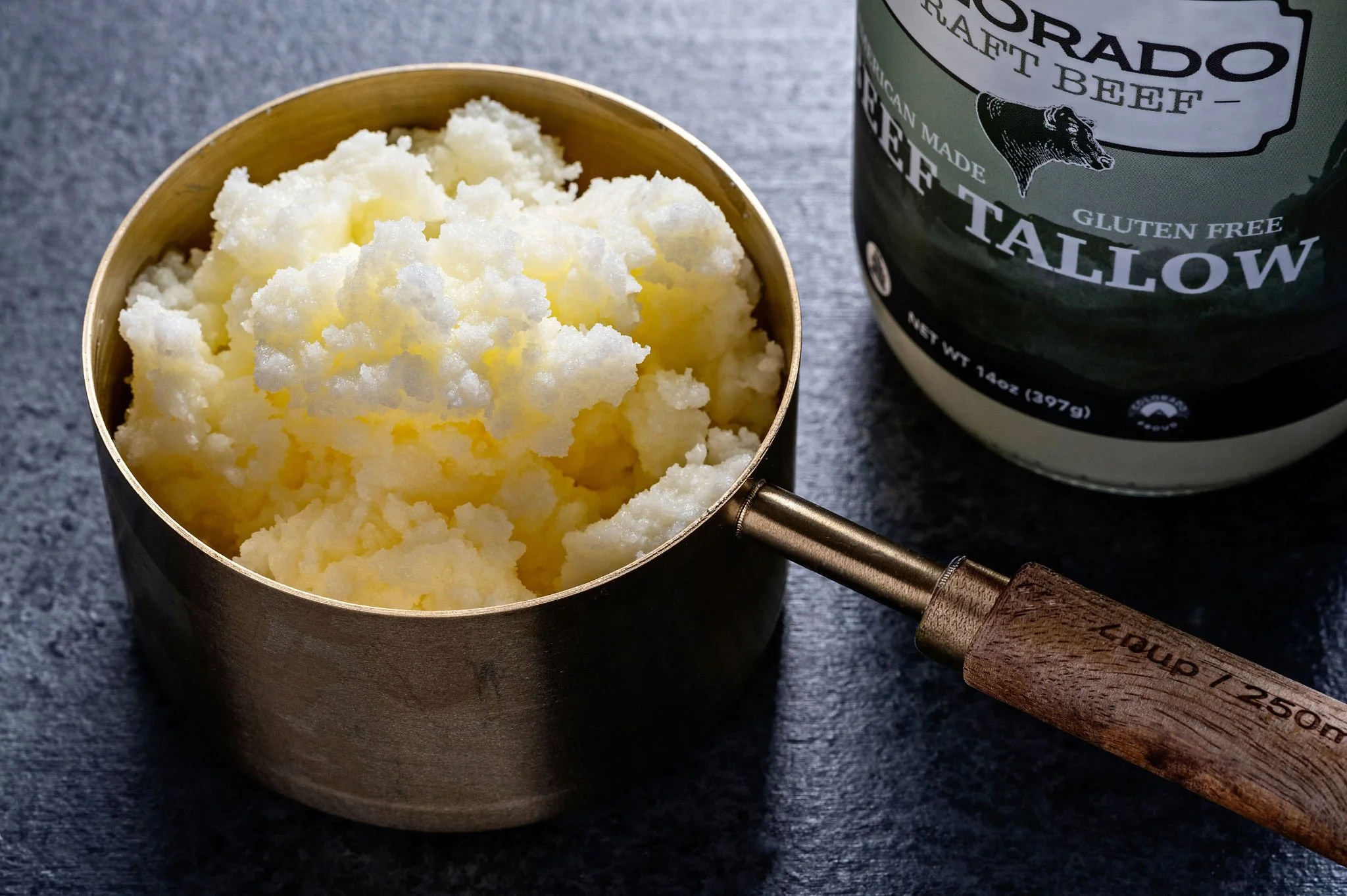
Anyone who has broken down a brisket from Costco knows where it comes from. Keep the fat trimmings in a jar, and you've got yourself one of the oldest cooking fats in the world, but do we really need to buy this stuff?
Buying beef tallow may sound like buying bottled air, but not looking for ways to save it made for poor economic sense back then. Long before canola and corn oils filled the pantries, communities relied on the fat of ruminants and birds to roast and preserve food. It was an innovation born from “nose-to-tail” cooking, alternatively known as “thrift” these days: use as much of the animal as possible to reduce waste. Families rendered leftover fat after butchering, strained it, and stored it for months without refrigeration. It turned into beef tallow, pork lard, duck fat, and butter for frying potatoes and making stews richer.
Someone took one look at all the hoofed beasts and barnyard bounty on the farm and decided, “why not?”
Beef tallow did later fall victim to certain shifts in the second half of the twentieth century. Advances in industrial agriculture made sunflower, grapeseed, and vegetable oils in general inexpensive for manufacturers to mass-produce and for restaurants to opt into. At the same time, public health messaging and nutrition science increasingly linked saturated fats with heart disease. Olive oil quickly gained prominence for its monounsaturated fats, and supermarket shelves were lined with bottles promising to win consumers' hearts, quite literally.
But nutrition has rarely stood still. As research has continued to evolve, consumers have once again grown increasingly interested in traditional cooking methods, minimally processed ingredients, and whole-animal utilization. Recently, shelves are once again stocked with premium jars of beef tallow. Some have taken a step further by slathering it on their faces as part of a new skincare routine (don’t recommend).
People are rediscovering what previous generations already knew: sometimes one cook's scraps become another cook's treasure. The celebrated burgers in Chicago's Au Cheval are accompanied by fries cooked in tallow. Across the Atlantic, Belgian frites have long relied on beef fat for their signature crispness. In Botswana, seswaa (the national dish of slow-cooked, shredded beef) is often enriched with the animal's own rendered fat. British cooks still reserve beef dripping for Yorkshire puddings and roast potatoes, and some theorize that nothing browns vegetables quite like a spoonful of rendered beef fat.
The theory is chemically backed. Beef tallow is composed primarily of triglycerides, molecules built from glycerol and fatty acids. Compared with many liquid vegetable oils, it contains a higher proportion of saturated and monounsaturated fats. To the average cook, that molecular structure simply means stability. When cooking oils are exposed to prolonged high heat, they gradually oxidize, producing compounds that dull flavors and create off aromas. Tallow's fatty acid composition allows it to withstand higher temperatures before breaking down, making it especially useful for deep frying, roasting, and searing. With a smoke point hovering around 400 degrees Fahrenheit, depending on how it is rendered, it can endure the demands of a busy fryer without degrading as quickly as some more delicate oils.
It also contributes flavor, something many neutral oils intentionally avoid. During rendering, tiny fat-soluble compounds remain suspended in the finished tallow. When heated, they lend subtle roasted, beefy, almost buttery notes that amplify the Maillard reaction—the cascade of chemical reactions responsible for the deeply browned crust on a steak, the caramelized edges of roasted potatoes, or the crackling skin of fried chicken.
That's why chefs use it. Tallow transfers heat efficiently and helps create the contrast between a shatteringly crisp exterior and a fluffy interior. Fries cooked in beef tallow also tend to stay crisp longer after they leave the fryer, which matters when food spends several minutes traveling from kitchen to dining room. It doesn’t replace butter overall in the kitchen, but it expands the baker’s toolbox. Unlike butter, which contains roughly 15 to 20 percent water, beef tallow is almost entirely fat. Because of this, tiny pockets in savory pastries and flaky pie crusts form when the chilled pieces are folded into dough to melt in the oven.
But as expected, not everyone is convinced.
For some, beef tallow's resurgence is another wellness cycle destined to fade. Critics argue that expensive jars of rendered fat are simply the latest lifestyle product marketed to affluent consumers eager to romanticize the past. Others point out that the science surrounding dietary fats remains complex. While enthusiasm for seed oils has cooled in some corners of the internet, major health organizations continue to recommend emphasizing unsaturated fats as part of an overall balanced diet.
Neither putting beef tallow on a pedestal nor vilifying its nutritional outputs adds much to the essence of American cooking. At the end of the day, the answer is lawyerly: it depends.
If you've rendered a jar from brisket trimmings, don't feel obligated to drizzle it over everything. Save it for the dishes that reward it. Brown cubes of chuck for a pot of beef bourguignon. Fold a little into the crust of a steak-and-ale pie. Maybe brush a hot muffin tin with it before baking Yorkshire puddings. You may choose to toss honey-glazed carrots, parsnips, or delicata squash in a spoonful before roasting, or grease a cast-iron skillet for cornbread with a deeply browned crust.
By the same token, don't banish it after a single alarming headline or late-night WebMD search. Nor should it become the latest pantry idol because a TikTok influencer crowned it a superfood.
Good cooking has rarely been about chasing absolutes. Make thoughtful uses of what you have, understand your ingredients, and let each one do the job it does best.
Also, maybe leave the skincare experiments to something else.
