

At the Table: The Ramen Experiment
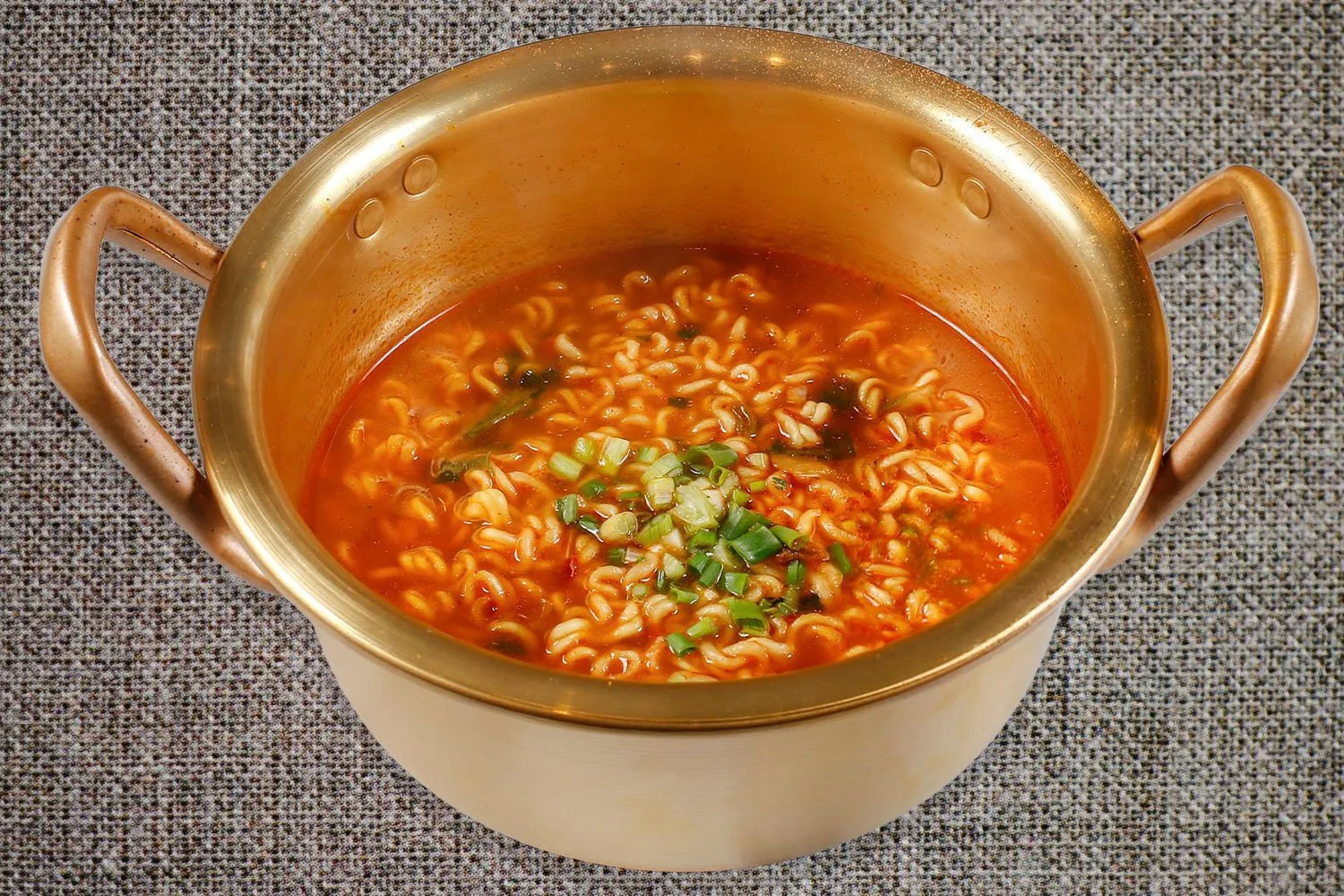
NurPhoto
Step 1: Tear open the seasoning sachet.
Step 2: Drop the noodle brick into a bowl and flood it with boiling water.
Step 3: Call it dinner.
That is the entire appeal of instant ramen. It is cheap, convenient, and requires little more than three minutes and a kettle.
Most people seem to forget how many culinary doors it opens. That same packet of noodles can be the base for crisp rice-paper spring rolls, garlic-butter noodle bowls crowned with jammy eggs, a creamy carbonara-inspired sauce, and whatever odds and ends are lingering in the refrigerator that day. But then, who would bother spending an hour dressing up the quintessential lazy meal?
Lisa Nguyen apparently, and millions of viewers who keep coming back to watch her turn cooked ramen into cheesy grilled sandwiches and burgers.
That unlikely specialty is surprising considering Nguyen never set out to become one of YouTube’s biggest home cooks. Five years into a career as a paralegal, she realized that meticulous paperwork wasn't the creative life she wanted. Food, however, had always been a constant. Growing up with a camera in hand and an appetite for discovering new restaurants, she began filming family-owned eateries around Wichita, Kansas, eventually launching Telehue Food, a videography project dedicated to documenting the people behind neighborhood restaurants. Nguyen spent her time interviewing owners, filming cooks at work, and capturing the stories behind bowls of pho, steaming tamales, or family recipes that had persevered for generations.
When restaurants shuttered during the COVID-19 pandemic, the cameras that once followed restaurant kitchens turned toward her own. Faced with an audience but no restaurants to visit, Nguyen reached for the one thing she knew how to cook at the time: Instant Ramen.
That same curiosity drives every recipe and tasting she publishes today. Instant ramen is never just dinner. A packet of Shin Ramyun is the experimental base for a pork-and-egg rice bowl inspired by the viral "dot cake" trend. Another day, chilled noodles are tossed in a nutty sesame dressing slicked with chili crisp for a dish better suited to a humid summer afternoon than a steaming bowl of soup. Elsewhere, Vietnamese stir-fried shrimp noodles borrow from the flavors of mì xào tôm, while green apple finds its way into Buldak Carbonara spring rolls. No recipe is elaborate for the sake of novelty. What happens if instant ramen is just another pantry staple?
Leftovers rarely remain leftovers for long in Nguyen's kitchen. Rather than cooking one meal at a time, she is constantly a recipe or two ahead. Browsing through her growing collection of ramen topping guides, you’ll find considerate suggestions. Instead of generic advice to "add vegetables," Nguyen points readers toward flaky salmon, sweet crab meat, Vietnamese bò viên beef meatballs, or delicate chili threads to drop into simmering broth. She has written guides explaining exactly when to add an egg to achieve the texture you want, how to tame aggressively spicy Buldak noodles without sacrificing flavor, and even how to build a DIY instant ramen bar for gatherings, complete with proteins, vegetables, condiments, and garnishes that let guests assemble bowls to their own tastes.
Nguyen also rarely seems boxed in by a rigid grocery list. She prefers wandering through farmers’ markets and neighborhood meat markets, letting whatever catches her eye shape the week's recipes instead. A thick-cut ribeye with generous marbling might become the centerpiece. A basket of glossy oyster mushrooms or a bunch of scallions still damp from the morning harvest might inspire a quick stir-fry. Fresh seafood glistening over crushed ice or fragrant heads of elephant garlic are less "special occasion" purchases than recurring characters in her kitchen.
When watching Nguyen's videos, you’ll notice that she isn't shopping for individual recipes so much as building a pantry of possibilities. Whether it’s garlic, onions, eggs, kimchi, Spam, seafood, steak, or fish sauce, one ingredient has a way of resurfacing several meals later. Even when a recipe sounds absurd on paper, her willingness to experiment makes viewers believe it might actually taste good: want to see if this works?
Equally important is the way Nguyen presents those recipes. She doesn't spend several minutes explaining emulsification or the chemistry behind starches before picking up a pan. Not everyone cares about that. Instead, she lets the camera linger longer on butter foaming around garlic, cheese stretching between chopsticks, egg yolks breaking into glossy broths, or noodles coated until every strand shines with sauce. Measurements are flexible, substitutions are welcome, and mistakes are often left in the final cut rather than edited out.
The food industry has long rewarded formal credentials. The culinary school diplomas, the restaurant pedigrees, and the years spent working a professional line. Entering from an entirely different profession means proving credibility in a space where expertise has long been measured by institutional experience and quite literally how “well-seasoned” you are. Digital creators have been challenging such faithfulness to the traditions. Rather than borrowing authority from a résumé, they build it one recipe, one successful meal, and one trusting viewer at a time. Consistency and the ability to capture an audience now more than a CV. Nguyen reminds viewers that expertise can be cultivated publicly, that passion can become practice, and that a willingness to keep cooking may matter more than where and how someone started.
People return to watch someone rethink the ordinary. Designed as one of the world's fastest convenience foods, instant ramen is reimagined as an excuse to slow down, rummage through the refrigerator, and see possibilities within a conventional shortcut. Lisa Nguyen is that re-imaginer.
