

Elegance Doctrine: Kinda Chic that Buzzwords are Losing their Power
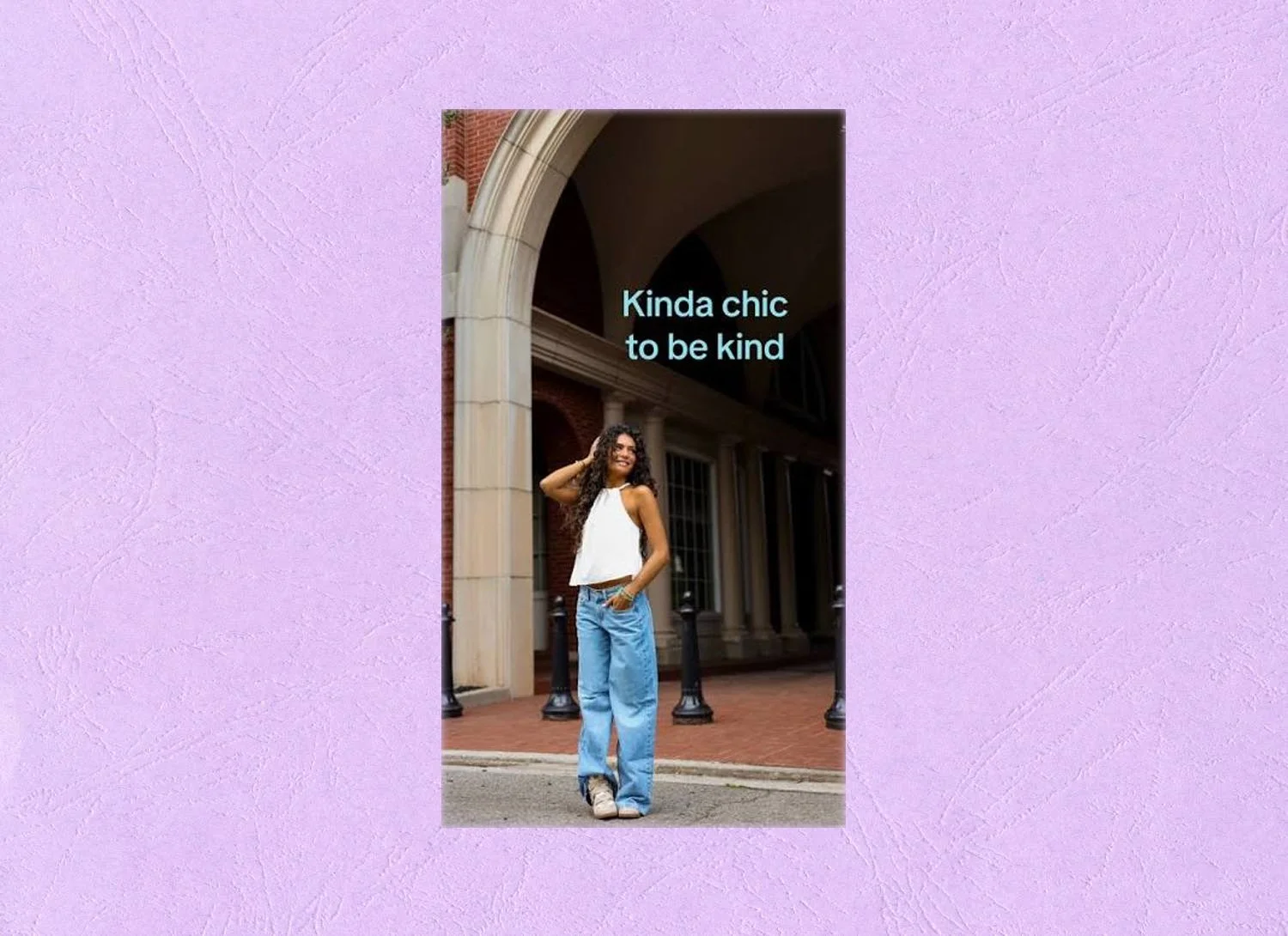
In 2022, Vogue contributor Sarah Spellings published an article about how the word core was replacing chic as an add-on to a specific style; Boho-chic was replaced with ballet-core and so on. But the cores quickly fell off and we are now seeing the resurgence of chic in a new way.
The Tik Tok trend “kind chic” refers to a creator calling out something seemingly mundane, individualistic, or inherently not-chic and saying that it’s actually “kinda chic to …” This trend seemed to garner positive reactions at the beginning of its life and is now dying down again. Source @databutmakeitfashion on Instagram cites that the positive sentiment surrounding the word has dropped 14% from March 2026 to August.
However, chic isn’t the only trendy word to fall off like this. It was once demure, then cool girl, and later whimsical. The connection among these words is not just that they were once trending on social media, but also that their power leaked into other trends. Fashion and style, food, home decor, and even the way we try to be perceived on a personality level.
The rise and fall of demure
The “very mindful, very demure” trend on Tik Tok started with creator Jools Lebron, @joolieannie on Tik Tok. She used the phrase to mock her look wearing a long blonde wig, a full beat, and long acrylic nails joking that others should learn from her mindful and demure aesthetic for the workplace. The joke quickly took off and other users started to incorporate the joke to counter their own obvious extravagance.
While purely meant as a satirical joke, some users commented on the racial implications of the trend, saying that its inherently joking nature may carry a heavier burden for black women who have historically been labelled with stereotype of “loud” both in personality and sense of style. Some creators have said that the trend may impact POC differently as the trend often points out styles like wigs, fake nails, and full coverage makeup (which Jools sports in the original video) as being obviously not “cutesy” or “demure” looks. Whether due to this interpretation or simply because the trend had been oversaturated, demure soon died out.
Step-by-step on to be a cool girl
After demure came the “cool girl.” Somehow morphing into a cookie-cutter aesthetic on its own, the cool girl started as effortless, then she became chic, then she became someone who didn’t follow trends. In short, the cool girl has always been spelled out for us, even when her perceived coolness came from rejecting trends.
The cool girl is once again a marker of the loss of individuality in a society with rapidly evolving trend cycles. The cool girl, however is where we start to see creators countering the concept of the cool girl with pleas for users to form their own interpretations, or simply, to not care about being perceived as “cool.”
In 2024, ISISED published an article about the different Pinterest and TikTok aesthetics we have seen bounce around through the years. Through their explanation, we can understand that the term “cool girl” may have a societal implication in addition to a fabricated aesthetic. While a cool girl may wear the trendiest clothing or purposefully stray away from it, the term can be traced back to the attitudes of women we see in film and media who never fight back and are effortlessly daring. The cool girl is at the center of how all of these trends can be explained: women are put into categories of how they should be. The aesthetic and clothing and hobbies that go along with a coquette girl or a gorpcore granola girl serve to mould the person, not just their outfit, and that is the backlash that the cool girl is beginning to get.
Single-use whimsy
Whimsy is currently making its rounds on Tik Tok and Instagram. While some users attempt to whimsi-fy their lives by adding sprinkles to their morning matcha or going on an unplanned outing or “side quest,” others have been scorned for harming the planet in the name of whimsy.
Before the algorithm could predict my opinion on whimsy-maxxing, I was fed videos of people adding sparkly stickers to their plastic coffee cups and on top of face masks, purchasing maximalist home decor, or dopamine dressing. All of which involved the purchase of new decorations or pieces of clothing which might not have aligned with the user’s personal style, or adding yet another layer of plastic to a plastic cup, making it effectively non-recyclable. Whimsy-maxxing became an obvious grab at the pendulum swing of aesthetics going back to loudness and maximalism. While meant to embrace joy and “otherness” in a time of quick turn around trends, it fell perfectly into what we have always been seeing with these micro trends, it quickly turned wasteful and once again fed a predetermined aesthetic that killed individuality even though it was meant to feed it.
The next trend
The trend cycle never dies, it simply keeps going around and around until we rediscover something old, polish it off, give it a new name, and act like we’ve struck gold. Users who identify the uselessness in assigning catchy markers to preplanned aesthetics or the overuse of jokes and buzzwords have recently been stunting the algorithm with a counter to the original trends. A call for the cool girl to simply be a girl, calling out “just a girl” for its inherently anti feminism sentiment, the wastefulness of whimsy-maxxing, and how the sarcasm within the demure joke often targeted the aesthetics forged by marginalized communities.
