

Dialogue: Baggy Trousers: True Freedom or Fashion-Conscious Dressing?
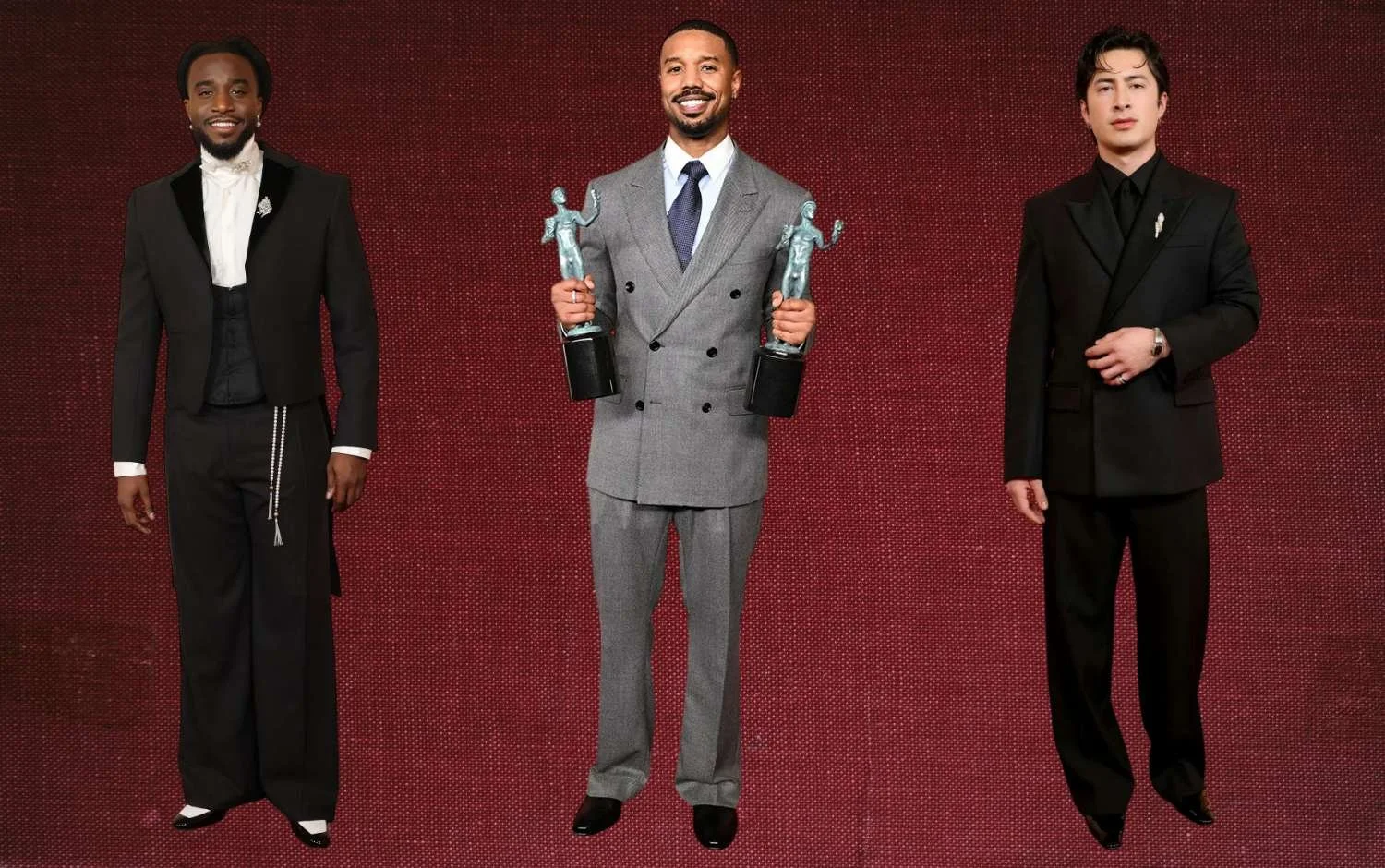
From Left to Right: Shaboozey, Micheal B. Jordan, and Hudson Williams
Wide-leg and barrel-leg trousers have made a comeback. Compared to slim and straight fits, wider pants offer thermal autonomy and unrestricted mobility. At the same time, higher volume in the lower half of the body opens up new ways to reclaim silhouettes within menswear that are sensitive, confident, and profoundly masculine. The possibilities for self-expression, comfort, and logical aesthetics in men’s dressing have grown so ample that they raise the question worth pondering. Are baggier trousers an act of rebellion by the modern man, who wants to proclaim his freedom by choosing clothing that prioritizes ease and workability? Or are they an adjustment of male garments to the stresses and triumphs that shape fashion today?
Taking a look at why these silhouettes emerged helps explain wider trousers in vogue again. The answer to the question, as it seems, lives in that history.
Where Wide Comes From
Emperor Marcus Aurelius wrote that “to see the things of the present is to have seen all that has been from time eternity.” This principle applies to fashion as easily as it does to anything. Today, brands such as AMI Paris, Uniqlo U, and COS are retailing wide-fit trousers across all their stores. Last year, haute couture brands including Louis Vuitton and Loewe presented their Spring/Summer collections with an array of loose trousers. Jonathan Anderson, in his final collection as creative director of the Spanish brand before moving to Dior, offered a study on masculine sensuality, with fluid shapes that presented rhythmic movements. For Louis Vuitton, Pharrell Williams and Nigo proposed wider pants reminiscent of Japanese street couture.
Much of their inspiration lies in the past, which in itself draws from a diverse cultural understanding of clothing around the globe. Navy bell-bottoms in the 19th century led to the “Oxford bags” popularized in the 1920s. The shift toward comfort in the West may have been a product of a more interconnected world during the age of colonization. The Hakama in Japan, the Sirwal in the Middle East, and the Shalwar in India and Pakistan are examples that showcase how the East prioritized filling the space around the silhouette rather than exalting the anatomical figure. These influences are why Japanese haute couture, channeling baggy cuts so typical of skate culture, trendy in the 1990s and 2000s. Now, be it for their comfort or their expressive nature, they are back.
The Need for Wide Trousers Now
Modern times call for pragmatism. The current working man’s lifestyle is prone to movement. With a work-from-anywhere attitude, clothing must be adaptable and versatile. Fabrics tailored to create spatial presence allow for more natural movement of the limbs and increase the amount of air between the skin and the cloth, which insulates the body. Cities are seeing higher temperature levels, and heat can create health risks and discomfort. Wider trousers allow for a chimney effect, where buoyant air rises and cooler air fills the vertical space between the leg and fabric.
The resulting thermophysiological comfort contributes to performance. The ergonomic nature of baggier trousers allows the modern man to go about his day with the assurance that he is in control, rather than his clothing controlling him. Wider trousers speak of comfort, and comfort speaks of sway.
The Aesthetics
Male silhouettes in modern fashion have moved away from restrictive fits. Designers today understand that the proportions of men are not enclosed in a set outline but can play with volume and drape to create garments that are uniquely inspirational for both wearer and viewer. Ready-to-wear collections like Dries Van Noten’s Spring offering let fabrics flow around the body, prioritizing the sensibility of light clothing movements across space.
Aesthetically, male fashion is reaching toward a more poetic version of manhood. Culturally, dressing has evolved in a way that encapsulates a wider range of body types. Figures are artificially made larger through the fabric's invasion of the space adjacent to the body, which results in a pronounced masculine presence, as it gives the appearance of being bigger.
These exaggerated proportions allow for greater self-expression, not only for the individual but for all men within society. This change from slim to wide, straight to barrel, is a quiet message of unity within menswear trends.
Adjusting to a Modern World
Baggier trousers allow men to proclaim a sort of freedom. A heavier lower half enlarges the masculine presence without becoming overwhelming, and underlines self-assurance. By prioritizing comfort, versatility, and functionality, freedom becomes the statement. Men are no longer inhibited by what they wear. Like the clothes he wears, the man himself has swelled and the broken manacles of older versions of manhood. Now it is time for more modern, more comfortable, more confident men. Modern times are rebellious by nature, since everything that happens in the present is new, and clothes should fit the purpose, granting the comfort and ease that today's routines require.
The fashion industry is right to create garments that suit the collective rather than only the individual. Within the relaxed facet of current designs lies an understanding that fashion moves along with the times. Our society’s stresses and triumphs today are what adjust the rules for what should be worn tomorrow. The looseness of men’s trousers represents a recalibrated version of fashion-conscious dressing, one that understands that what all men ultimately want is simply to be free. The modern man’s rebellion is his adjustment to a changing world.
