

The Zeitgeist: The Value of Print: How Tangible is AI?
Yunus Kılıç
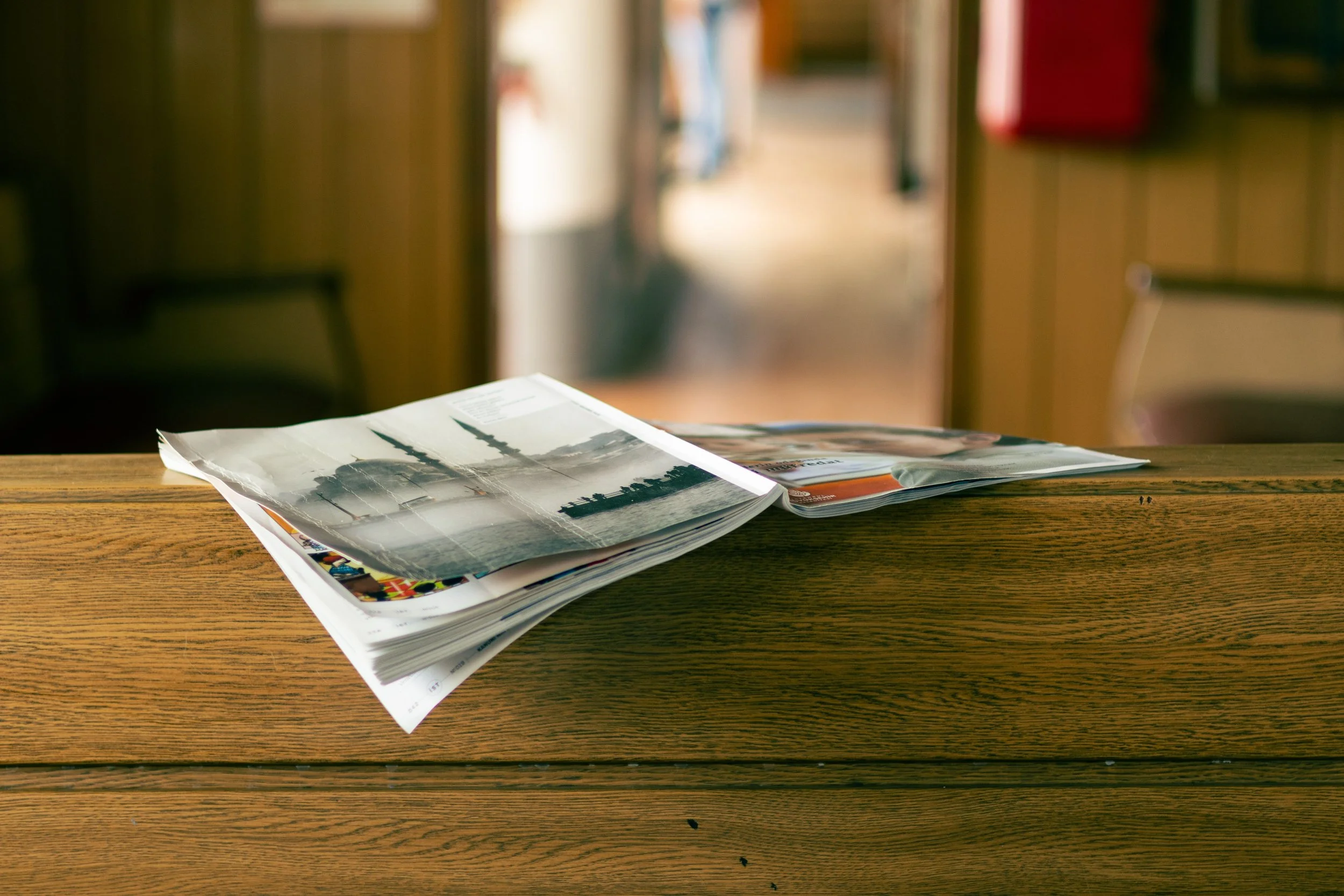
Microsoft AI just rebranded. Thanks to in-house creative direction and outside assistance from the creative agency Made Thought, and copyediting from the team behind Delayed Gratification, with a new salmon color aesthetic and unique serif type face, the artificial intelligence company has launched a new magazine. Review is a quarterly publication that positions itself “as a space in which conversations can converge and become liberated from inter-industry echo chambers.” Funded by Microsoft AI, the first issue titled “People and Technology” brings together a diverse bastion of seventeen contributors spanning areas of technology, film, music, philosophy, and literature. The investor and entrepreneur Sarah Guo shares the publication’s pages with technology ethicist and academic Pak-Hang Wong and philosopher Kwame Anthony Appiah. On the side of culture, novelist Naomi Alderman, the acclaimed musician Nick Cave, and academy-award winning screenwriter Jonathan Nolan all lend their takes on how artificial intelligence has affected and can affect the future of the creative industry.
The Humanist Review of AI is not trying to compete with media moguls at Conde Nast or Hearst. Its first issue, though stocked internationally, has been circulated minimally around five countries. It’s an understated move, as Review, despite being a print publication, feels far removed from the journalistic enterprise. Rather, it functions like a “little magazine.”
Grace Byron, a prominent writer on Substack with bylines in Vogue, The New Yorker and The Nation, posits that the function of the little magazine has historically been associated with cultural criticism. In her recent piece, “The New Function of the Little Magazine” Byron places AI as an antithetical to criticism, writing that “AI is eroding people’s ability to read, interpret, and think.” As she explains, the new function of the little magazine is to aid in “trying to understand” culture. Review tells its readers that its function is to do exactly that. CEO of Microsoft AI and former head of DeepMind Mustafa Suleyman writes in the Editor’s note: “We need to get obsessed with what it can do for humanity. How will it actually improve human well-being? How can we help deliver on its true purpose? These questions extend across the full spectrum of society, rightly beyond any one lab, business, organization or group. It’s a debate that must involve everyone.”
Sitting on the shelves in print magazine stockists however, Review poses even more questions. Why would a company, focused on digital advancements commission a magazine? Why make one now? What is the value of print in the first place? And is believing in print old-fashioned in a digitally dominated world? A more critical skeptic would shrug Review off as a puff project pedestalling the technology that funds it. It is no secret that along with literacy rates, attention spans are shrinking, and the reading landscape is fragmented. The print industry is drying up. Publishing moguls have found it hard to pivot to digital and video. These days, print magazines like Vogue can seem like nothing more than an archaic bound book of ads.
Not only is the print industry in trouble, writers are finding it harder to connect with their readers. Loss of context is an issue in a world where discourse refuses to die. With audiences who are more likely to scroll and summarize rather than pick up a magazine in person, they are also less likely to engage in fruitful conversation, online and off. Readers squabble in comment sections of articles, debate on social media threads as context is distorted in retweets, shares, and replies. Declining media literacy rates, as well as increasing levels of miscommunication and “misreading” are rampant. Moreover, while all this is happening, the relationship between the writer, the editor, and the print material is straining. Most reading today is done on screens and not in print. Readers are more likely to read on social media feeds:the 250-500 characters of a tweet. Self-respecting readers are pivoting to digital media, and magazines follow suit, launching apps for readers to read on their phones. Substack has made it so you never have to leave your inbox to read.
In the pivot to digital, the magazines have resorted to hosting their own newsletters as bonus content either on platforms like Substack or through their own websites. The New York Times seemingly infinite newsletters come to mind, as do all the latest television and celebrity news from Vulture landing in email inboxes. Everything has a subscription model or operates on an infinite scroll display similar to streaming on Spotify, Netflix, or through the algorithmic explore pages of social media platforms, such as TikTok or Instagram.
Through various cuts to Art and Culture desks, as was the case at The Washington Post, as well as the near closure of magazines, like The Believer, all signal that the print industry is diminishing in its reach. In conjunction with the financial situations of magazines, Bookforum and Astra, show that the publications are operating under perilous and precarious situations. The acquisitions and mismanagement of media empires in “the taste economy” are a whole other beast altogether. Success today thrives on surviving in the new digital world, so it is curious that Microsoft AI wants their next form to be physical. As magazines lock their articles under paywalls, AI can summarize them for free. No need to read 1,000 word thinkpieces about niche topics, when an AI agent can do all the critical analysis and synthesis for you. And as entry level journalists navigate the new media landscape, Silicon Valley has begun to dip their toes in the world of fashion and art: Mark Zuckerberg’s high visibility at fashion events like Prada’s FW26 show during Milan Fashion week, and Jeff and Lauren Bezos, as lead sponsors and honorary chairs for the 2026 Met Gala.
Movies like The Devil Wears Prada 2 are highlighting the perilous future of big magazines. One of the major plot points of Prada 2 involves the protagonist Andy Sachs, struggling to justify the existence of Runway magazine in a bleeding media industry that is bought out by tech giants. It reflects a truism: moguls like Miranda Priestly find themselves unable to live the glamorous lifestyle of first-class flights and steak lunches thanks to cuts to previous sky-high budgets funding such glamorous luxuries. Outside of the cinema, entry-level jobs for columnists are becoming harder to attain and if they do exist, are becoming fewer and farther in between. Staff writers, the most secure position in a post-heyday magazine world, are being reassigned beats. In July 2025, The New York Times’ Sia Michel, a former music critic herself, announced the reassignment of prominent critics of theatre, TV, pop music, and classical music to general assignment reporting and in efforts to edge media coverage from print to video.
The situation may seem grim, but there are optimists. Jeremy Leslie, the founder of MagCulture, a London magazine stockist where Review is sold, said, in an interview with Huck, that magazines “are cultural artifacts” and that they “can fulfil different roles than they have in the past.”
Magazines can be a credible source of truth, even if financing them is an uphill battle. In their heyday in the sixties and seventies, they determined taste and culture. Writers with the likes of Joan Didion, Gloria Steinem and Susan Sontag pioneered a new, subjective yet investigative form of journalism that emphasized literary style and observational storytelling.This alternative way of reporting, separate from breaking news and by the book objectivity, ushered in analytical art and culture criticism. Then in the early aughts, the fashion magazine, with its luxury retail advertising partnerships, received yet another boom. Television series like Sex and The City and movies like Bridget Jones’ Diary and How to Lose a Guy in Ten Days sold the fantasy of working in glossy print magazines right before the digital media era that was soon to come. Susan Sontag’s “Notes on ‘Camp’” was published in The Partisan Review. One of the most influential essays of the twentieth century, Joan Didion’s “On Self-Respect” for Vogue spawned a whole generation of young, metropolitan women writers in her wake. Gay Talese’s celebrity profile of Frank Sinatra, “Frank Sinatra Has a Cold,” first appeared in Esquire magazine, and is still widely taught in creative writing programs across the country.
As of writing, The Humanist Review of AI is sold out in London’s magazine stockist MagCulture online. Microsoft AI has its eyes set already on Issue 2. On Review’s website, the next issue is “coming soon.” Review will stick around, but for how long, no one can be sure. Still, Review signals the magazine’s authority over art and culture. A little magazine’s criticism ethicizes our modern aesthetic objects with a review of a much-anticipated gallery exhibition, a novel, or a recent restaurant opening. Review attempts to generate criticism to “confront a world in which we coexist with artificial intelligence” ethicizing the relationship between people and technology. Print may look different than it did in the sixties or the early aughts, but it hasn’t fully vanished. Even in our digital world, it has managed to survive, albeit in a more hybrid form.
