

Rhythm Review: Love Spells Casts His Own On LOVE IS THE LAW
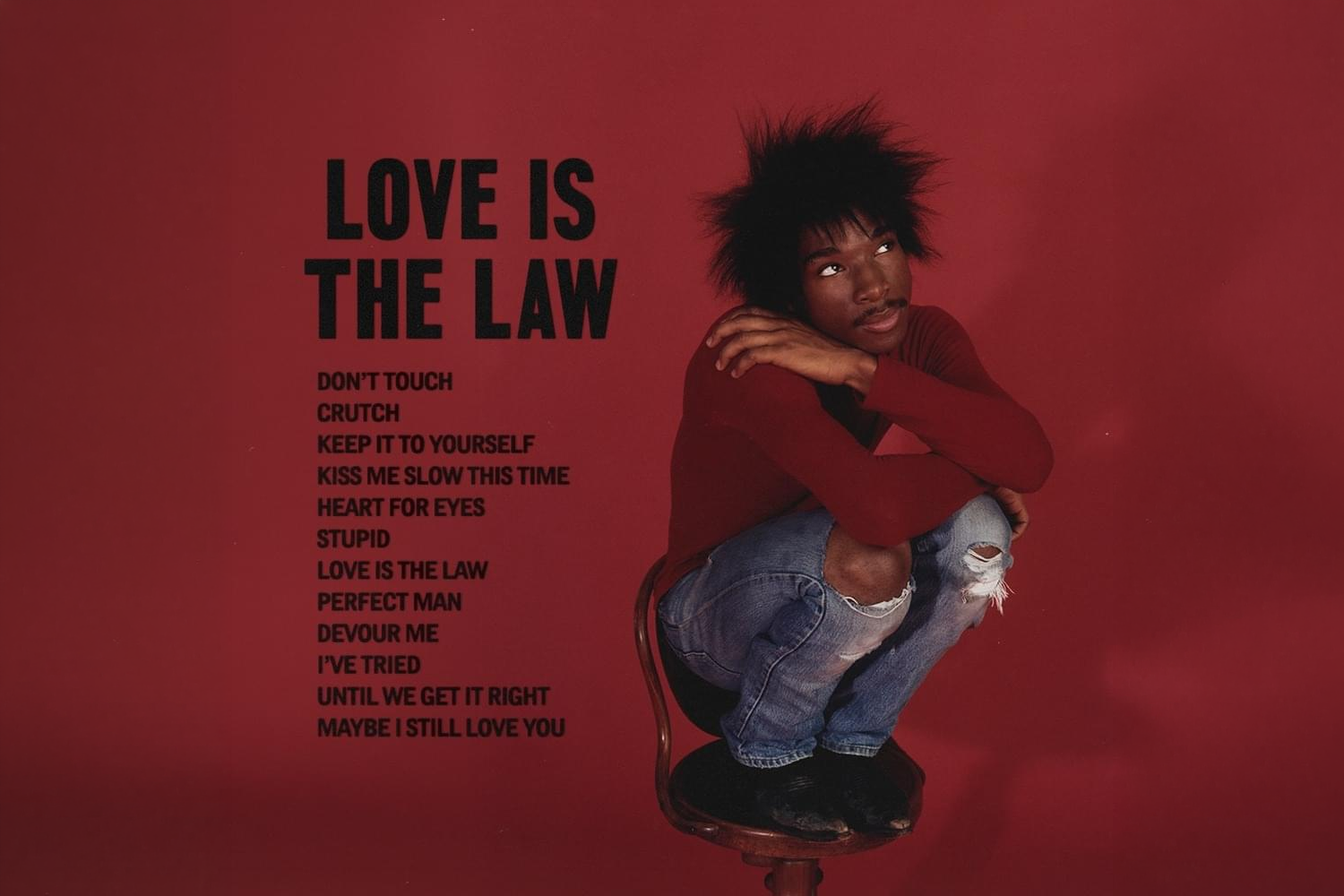
Love is one of music’s oldest subjects, but Sir Taegen Harris makes it feel strangely unfamiliar on LOVE IS THE LAW, his debut album as Love Spells. At 21, the Houston-born artist has made a record almost entirely consumed by romance, heartbreak, desire and the consequences that follow. There is nothing particularly new about singing about wanting someone who does not want you back, or staying attached to someone you know is hurting you. What makes LOVE IS THE LAW so compelling is the way Harris performs those feelings. His voice can sound delicate, feminine and almost weightless one moment before becoming desperate and overwhelming the next. The effect is hypnotic. Ironically, much like his chosen name, Love Spells feels like its own kind of love spell.
Harris has described love as the force around which our lives revolve, arguing that people make countless decisions because of it and that many of their problems emerge from it, giving the album its title and its structure. Across these songs, love is treated almost like a governing system, with Harris repeatedly surrendering himself to its rules even when those rules are clearly working against him. He is pleading, bargaining, accusing, and forgiving, often within the same song. The album’s emotional world is less about a single breakup than the cycle of attachment that makes leaving someone difficult in the first place.
A Voice That Changes the Character of Love
The clearest reason these familiar subjects remain engaging is Harris’ voice. He frequently sings in a higher, softer register that gives his performances a distinctly feminine quality, recalling the androgynous vocal approaches of artists like Prince and the intimate falsetto of Cigarettes After Sex. It brings another dimension of his vulnerability, allowing himself to sound fragile.
That vocal approach makes even some of the album’s more exaggerated declarations work. On “Crutch,” Harris sounds almost weightless as he sings about the complicated dependency between two people. The song is one of the album’s strongest examples of his ability to make emotional insecurity sound beautiful without making it feel distant. “Keep It to Yourself” takes that same vulnerability inward, turning a relationship into something private and almost sacred. Harris does not want outside opinions interfering with what exists between two people, even when that relationship is clearly unstable.
These two standout moments on the record aren’t just strong because they’re the most sonically catchy, but they demonstrate how you can take straightforward ideas about romance and make them compelling through delivery. The songwriting does not always need an elaborate concept when Harris’ voice can give a familiar sentiment an entirely different character.
From Kevin Abstract to Love Spells
Before fully becoming Love Spells, Harris was already developing his instincts around other artists. One of the most significant parts of that early period was his involvement with Kevin Abstract’s Blush. After moving from Houston to California, Harris eventually received an invitation from Abstract to move in and work on the project. That experience placed him inside a different creative environment and gave him the opportunity to develop alongside an artist known for building entire worlds around his music. His time working with Abstract feels less like an unrelated credit and more like an important part of the path toward figuring out how he wanted to present himself as an artist.
Heartbreak With Momentum
Despite the album’s fixation on heartbreak, LOVE IS THE LAW is not consistently slow or mournful. Harris has spoken about his love of ’70s and ‘80s music and New Wave, as well as his experiences going to Houston’s Numbers club, and that background gives the record a sense of movement. “Stupid” is one of the clearest examples. The song begins with the softness that dominates much of the album before opening up into something larger, with electric guitar and drums giving the emotion somewhere to go.
That contrast is essential. If every song stayed at the same emotional temperature, the album’s romantic obsession could quickly become exhausting. Instead, Harris occasionally allows the production to expand around him. “Perfect Man” has a little more movement while maintaining the same desperate romantic perspective, presenting Harris as someone willing to offer everything he has in exchange for being loved.
“Devour Me” pushes that desperation further, reducing the arrangement to a sparse guitar while Harris practically surrenders himself to the person he loves. “I’ve Tried” is more cinematic, using orchestration to turn heartbreak into something larger and more dramatic. By the time the album reaches “Until We Get It Right,” Harris is caught in a cycle he knows he cannot escape. He understands the relationship is damaging him, but he still believes there is another chance to make it work.
Maybe I Still Love You
The album’s final track, “Maybe I Still Love You,” is an appropriate ending because it refuses to provide the clean resolution that a breakup narrative usually demands. Harris does not definitively move on. Instead, he leaves the question hanging in the title itself. Maybe he still loves this person, and maybe that is the problem.
That uncertainty is ultimately what makes LOVE IS THE LAW work. Harris is not presenting love as something simple or necessarily healthy. It is an obsession, a source of comfort, a source of pain and something powerful enough to make people repeatedly act against their own interests. The album’s greatest strength is that Harris commits completely to that contradiction.