

Next Wave: Anthony Hervey Lets the Horn Do the Talking
anthonyhervey.com
One of Jazz’s defining traits is its ability to carry history forward without ever feeling stuck in it. Constantly reinventing itself, the timeless nature of the genre lives through the musicians who continue to reshape it, finding new ways to challenge its boundaries while preserving its foundation. For Anthony Hervey, that balance between tradition and reinvention sits at the core of how he understands music. Whether leading his own work or stepping into spaces shaped by those before him, he approaches Jazz as something still unfolding.
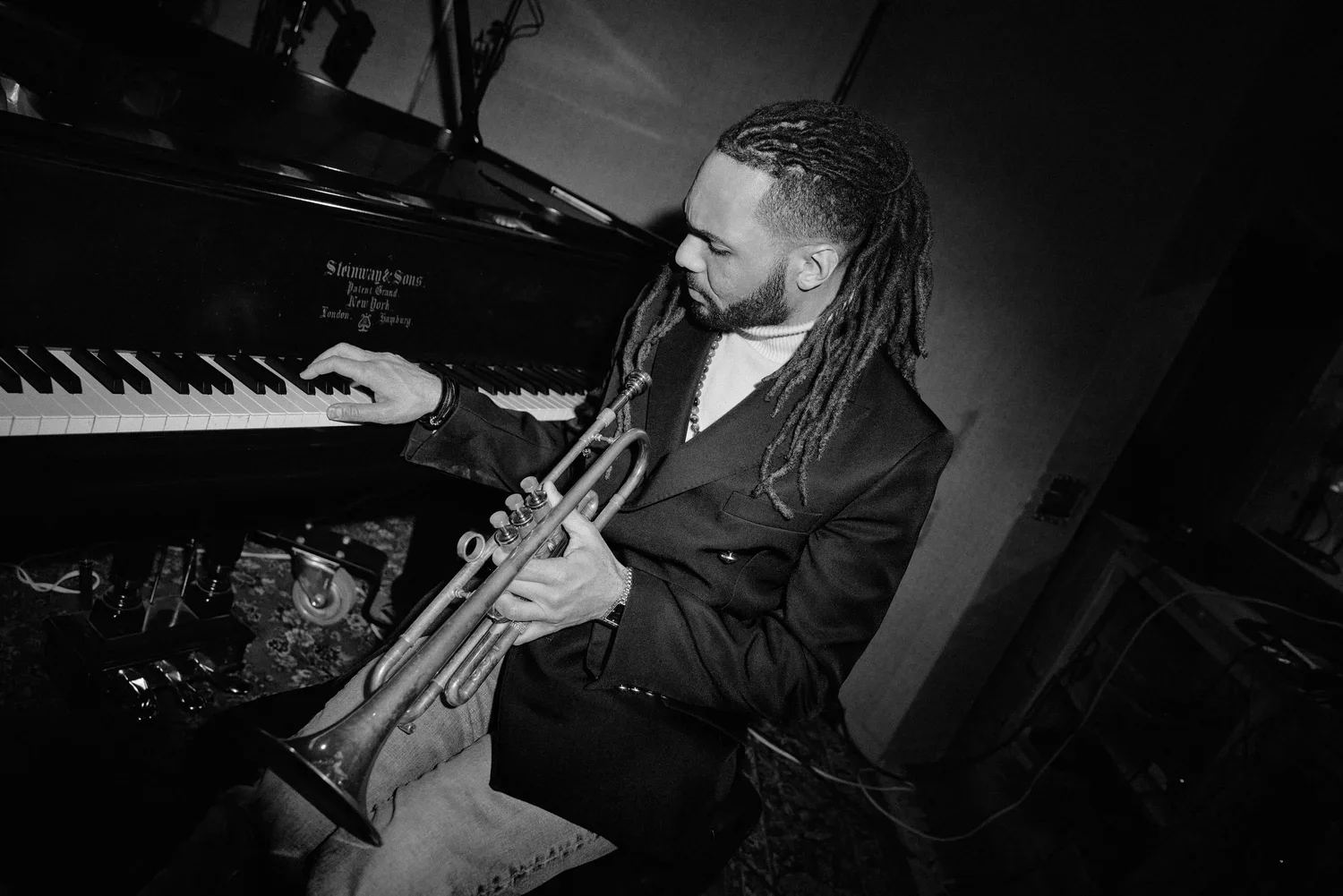
Originally from South Florida, Hervey didn’t always see himself behind the trumpet. It wasn’t until sixth grade, after catching a clip of Freddie Hubbard on TV, that something shifted—setting him on a path that would eventually lead to the San Francisco Conservatory of Music, where he now teaches, and to stages across the world.
Mentorship from Wynton Marsalis, who described him as a “beautiful trumpet player of the first magnitude,” has placed Hervey in rooms most artists spend years trying to enter. Whether performing alongside Christian McBride and Jon Batiste or stepping in for Marsalis himself, has built a reputation on reliability as much as ability—something that carries real weight in a tradition as guarded as Jazz.
Where Tradition Meets Personal Voice
Hervey’s own work moves freely across a wider palette despite his institutional ties to Jazz’s core. As the leader of the Anthony Hervey Quintet, he draws from Ragtime, gospel, blues, and R&B while maintaining the structural clarity that defines Jazz at its foundation. The result feels fluid, with each influence folding naturally into the next.
That approach comes into full view on his debut album, Words From My Horn. The title alone sets the tone. The trumpet has a voice of its own, shaping each phrase with intention and direction.
Hervey roots his music in lived experience, shaped by the people he’s encountered and the moments that have stayed with him. He carries that idea with him in a small charm attached to his trumpet, given by his grandmother, alongside the phrase: “When words fail, music speaks.” From there, Words From My Horn unfolds through feeling rather than explanation, allowing the music to communicate what language often cannot.
That intention becomes clear in how Words From My Horn unfolds. The album opens with momentum—fast-paced instrumentation and warm, full arrangements draw the listener in. The trumpet leads confidently, cutting through each track while keeping the overall feel inviting.
As the album progresses, the energy shifts. By its midpoint, tracks like “But Beautiful” introduce a slower pace, allowing space to open within the arrangements. The piano glides more freely, and the trumpet settles into a less dominant role. Having already established its presence, the horn becomes more selective, giving each entrance greater weight.
That contrast deepens on “Smoky Cloud,” the album’s only vocal-led track. Slower and more stripped back, it leans on piano as its foundation, with the trumpet used sparingly. The shift creates a second half that feels reflective and controlled, where restraint shapes the experience as much as sound.
That transition toward a more open, vocal-led space continues in Hervey’s later 2025 releases,which bring in more vocal performances through collaborators. It’s a natural extension of the album’s premise, where the concept of “voice” expands beyond a single instrument and becomes something shared across the music itself.
Within that structure, “Du-Rag” stands out both musically and culturally. A modern reinterpretation of the rag form, the track draws from a lineage that includes “Maple Leaf Rag” and “Tiger Rag,” while placing itself firmly in a contemporary context. Even in its naming, “Du-Rag” reflects how modern Black identity continues to shape and reinterpret tradition, rather than sit outside of it.
The track moves with a light, playful energy. Driven by stride-style piano and shaped through Hervey’s collaboration with pianist Sean Mason, it carries a sense of motion that feels natural and unforced. Their interplay creates a conversational flow, with ideas passing back and forth in real time. The result feels lived-in, as if the tradition is being experienced rather than revisited.
Sound as Language
At its core, Words From My Horn centers on connection. The video for “Du-Rag” showcases this directly, with Hervey and Mason simply enjoying each other’s company. Hervey believes music serves as a shared space where people from different backgrounds can come together and experience something collectively, a perspective that gives the album a quiet sense of purpose.
That outlook carries into his playing, where his approach to the trumpet shifts between presence and restraint, knowing when to step forward and when to leave space.
There’s an understanding in that balance of what it takes to pursue this kind of work. As Hervey reflects, the uncertainty, the lack of guarantees, and the constant need to trust your own direction all sit quietly beneath the surface of his work, giving the album’s optimism its weight.
At the center is a belief Hervey has carried from the beginning: when words fail, music speaks. In Words From My Horn, that idea comes through in the phrasing of the horn and the spaces left between notes, where meaning isn’t spelled out, but felt. And in that space, he says exactly what he needs to.