

Next Wave: ALex vs aLex and the Future of Alternative Latin Pop
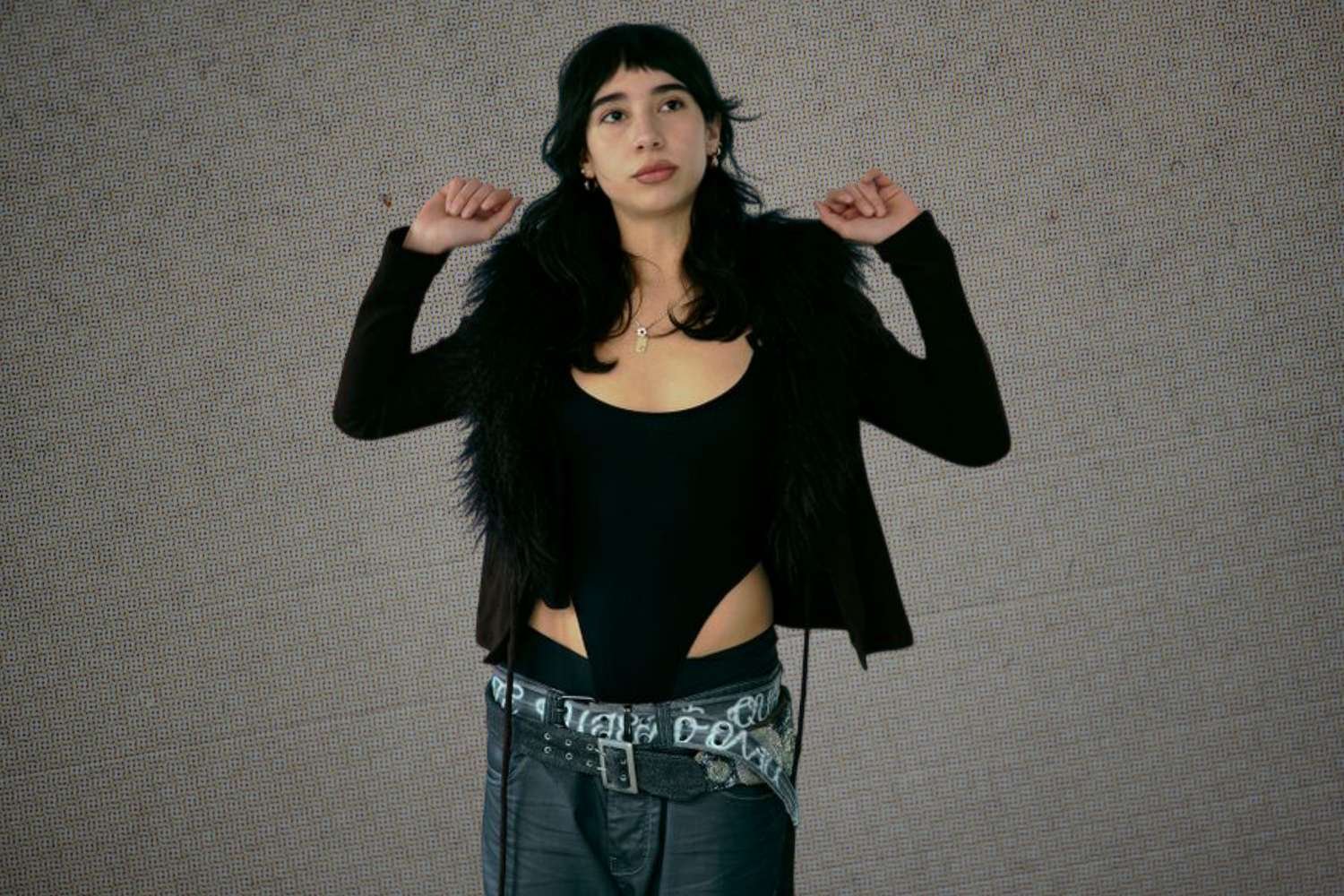
A decade ago, artists experimenting outside traditional Latin music often felt like exceptions. Today, that landscape looks very different. Projects like MOTOMAMI helped prove that Latin pop could absorb club music, electronic experimentation, and internet culture without losing its identity. What once sat at the edges of the scene now feels embedded in its centre. While artists like Rosalía pushed that shift into the mainstream, a newer generation is taking those ideas in less obvious directions. Guatemalan artist Sofia Insua, better known as aLex vs aLex, sits within that next movement.
Insua first gained attention as the vocalist of Guatemalan band Easy Easy, but her solo work has steadily formed its own identity. Since the release of her debut project nyc minute, alongside appearances with artists like Rusowsky and Ralphie Choo, and a recent performance at Primavera a la Ciutat, she has become part of a broader wave of artists reshaping what alternative Latin music can sound like from the inside out.
Her music moves between hyperpop, alternative R&B, jungle, electronic music, indie pop, and Latin references without treating any of them as fixed categories. The result is not genre fusion in the traditional sense, but something more fluid.
Parallel Creative Systems
It is also important that aLex vs aLex is not just a solo moniker in the conventional sense. It functions as one part of a wider creative system built by Insua across music, performance, and screen work. Born and raised in Guatemala and now based between New York and Berlin, she works not only as a singer and composer, but also as an actor and interdisciplinary artist trained at the American Academy of Dramatic Arts in New York.
Within that context, aLex vs aLex becomes less of an alter ego and more of a focused outlet. It sits alongside her other projects, Easy Easy (active since 2017) and ERA C (active since 2020), both of which she also leads as vocalist and composer. Rather than marking separate eras or stylistic shifts, these projects function as parallel frameworks. Each one has its own structure, its own approach to voice and composition, and its own way of organising emotion. The result is a body of work that resists the idea of a single, unified artistic identity.
Under Easy Easy, Insua’s voice sits within band-led songwriting and more traditional alternative structures. With ERA C, her work moves further into electronic and experimental production. aLex vs aLex pushes her electronic work further into more of the subgenres that emerged on the internet.
What becomes clearer when looking at Insua’s wider practice is that this approach is not limited to music. Across acting, movement, and installation work, she consistently returns to the question of how emotion is built, transferred, and received across different mediums. Trained as an actor, her focus is less on character in a traditional narrative sense and more on how emotional states can be constructed through voice, timing, and physical presence.
This appears across her screen and voice work, which includes a co-starring role in Netflix’s Orange Is the New Black, appearances on Comedy Central’s Alternatino, and voiceover work for organisations such as the United Nations and UNICEF. While these projects sit in very different contexts, they show how attention to tone, pacing, and delivery shape emotional meaning even outside of narrative performance.
That same logic carries into her contemporary performance and installation work. In pieces such as ANATOMALIA (2022), directed by Meagan O’Shea in Potsdam, and The Feeling is Mutual, developed during a residency at HAU Hebbel am Ufer in Berlin, Insua moves away from traditional character-based performance. Instead, she works with repetition, gesture, sound, and digital elements to build environments where emotion is communicated through structure rather than story. These works treat performance less as representation and more as a set of behavioural cues that an audience reads in real time.
Seen through this lens, her music starts to look less like a separate practice and more like an extension of the same approach. The distinction between Easy Easy, ERA C, and aLex vs aLex is not simply stylistic development, but a shift in positioning: band songwriting as one medium, electronic composition as another, and aLex vs aLex as the most personalized version of the same idea.
Reworking nyc minute
This systems-based approach becomes clearest when applied directly to her production choices, particularly in how she revisits and reworks the same material. A clear example is the release of nyc minute (reworks), a second version of her debut project that doesn’t function as a simple remix package, but as a structural reconfiguration of the original record.
Rather than treating the EP as a finished statement, Insua returns to it and effectively rebuilds its internal logic. Tracks from nyc minute are reinterpreted through new production approaches and, in some cases, repositioned within altered sequencing structures that change how the project unfolds from start to finish. Where the original nyc minute presents itself as a relatively linear introduction to her solo world, reworks disrupts that order, placing songs in different emotional and rhythmic relationships so the record no longer moves in a fixed direction. The result is a version of nyc minute that behaves less like a revision and more like a parallel structure of the same work.
Taken together, it also reflects something more fundamental about Insua’s broader practice: a willingness to treat every project, whether music, performance, or screen work, not as a finished statement, but as something that can be revisited, reshaped, and carried forward in different forms without ever losing its core intent.