

Dialogic Canon: When Words Make Culture: Otherwords—the Linguistics Show You Didn’t Know You Needed
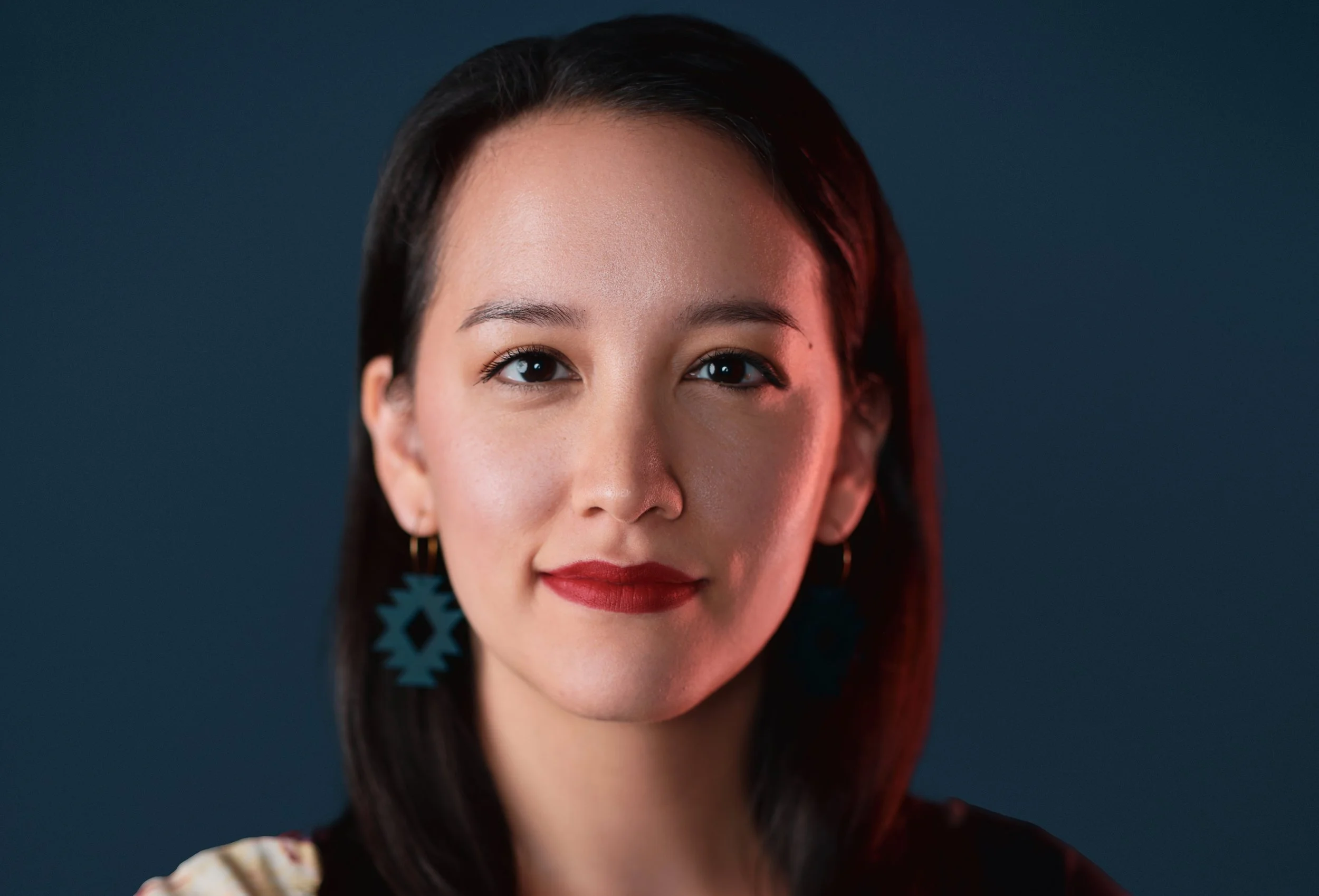
Hosted by sociolinguist Erica Brozovsky, this smart‐and-fun web series from PBS Digital Studios’s Storied digs into the cultural, historical and social power of language, which is perfect for curious, globally minded viewers who live at the crossroads of identity, etymology and pop culture.
There’s something quietly radical in a show about punctuation. That is to say: when you’ve grown up in a media culture addicted to visuals, buzzwords and ultra-short loops, the idea of a deep dive into something as seemingly mundane as the comma sounds like…homework. But here’s the thing: the way we use punctuation, the languages we speak, the body words we name—they’re all cultural signposts. They show us where we come from, who we are now, and where we’re headed.
That’s the argument behind Otherwords, a sub-series on PBS Digital Studios’ Storied YouTube channel. Hosted by Erica Brozovsky, a sociolinguist whose academic work focuses on language, identity and variation, the show has quietly become one of the most engaging educational offerings online. It blends academic insight with accessible storytelling, so instead of feeling like a 400-level theory lecture, you end up thinking, “Huh, I never thought about that before, but now I kinda have to.”
Why Otherwords stands out
In the crowded world of educational YouTube channels, where every thumbnail promises to “blow your mind in five minutes,” Otherwords stands apart for its tone and ambition. On one hand, you have rigorous scholarship: Dr. Erica Brozovsky isn’t merely a charismatic host, but a trained sociolinguist whose research interrogates how language variation signals identity, power, and belonging. Her academic foundation lends the show a level of nuance that’s often missing from digital edutainment; she’s not dumbing things down for clicks, she’s breaking things open for understanding.
On the other hand, each episode is built for everyday curiosity. Think punchy visuals, witty narration, and the kind of pacing that makes a linguistics lesson feel like a pop-culture explainer rather than a lecture hall recap. Brozovsky’s delivery is breezy but intentional—anchoring complex ideas (like historical sound shifts or bilingual code-switching) in digestible, visual metaphors. The result is a show that feels alive and modern, while still rooted in serious academic terrain. It’s the sweet spot between a grad-school seminar and a TikTok rabbit hole: rigor with rhythm.
There’s also a subtle but powerful representational element at play. For viewers who rarely see women of color leading conversations about language, culture, and knowledge production, Brozovsky’s presence matters. Her perspective reshapes who we imagine as a “linguistics expert” and expands what scholarly authority can look and sound like online. That inclusivity extends to the topics themselves—episodes that move easily between ancient Indo-European roots and twenty-first-century slang, inviting both scholars and casual viewers to see themselves reflected in the evolution of language.
For an audience of educated, globally aware young adults—especially folks of color who bring multilingual, multicultural backgrounds to their media consumption—Otherwords resonates deeply. It asks: what happens when language isn’t just a tool, but also history, memory, identity? How do the languages you grew up with, the ones you picked up on the side, the ones you choose to ignore—how do they shape your worldview? The show suggests that every accent, every code-switch, every linguistic quirk is its own archive. And in an internet age obsessed with immediacy, Otherwords reminds us that the words we use every day are living fossils of who we’ve been all along.
Notable episode themes
Here are three episodes that illustrate how the show spins clever topics into cultural commentary.
“Punctuation’s Weird Backstory”
In this episode, Brozovsky walks you through how the neat row of sentences you see on a screen today evolved from ancient Greek texts written in boustrophedon style, alternating left-to-right, right-to-left, without spaces between words. From there we get to the Hellenistic dot system of Aristophanes of Byzantium (ca. 200 B.C.), who proposed mid-level, low and high dots for short, medium and long pauses. Over centuries, Christian scribes and Irish monks introduced word-spacing, paragraph marks and ligatures: the ampersand, apostrophe, pilcrow and more are all part of the story.
The notion that punctuation was once optional, then later essential, tied to Christian textual authority in the late Roman Empire when mis-reading the text could mean theological disaster. Fast-forward to today: digital minimalism means younger writers often skip punctuation entirely or repurpose it (hello social-media hashtags). The episode forces you to ask: what happens when the markers of our language shift?
“Is Bilingualism a Superpower?”
Brozovsky begins with a visual: the duck/rabbit ambiguous image. Bilingual children, research shows, are better at flipping between the two. The episode dives into how infants start out capable of prioritising all phonemes of all languages, but by around six months the brain narrows to those of the native tongue. Bilingual kids, conversely, can maintain multiple phonemic systems if both languages arrive early enough. There’s discussion of code-switching, rhythm (prosody), syntax differences and even delayed Alzheimer’s onset associated with bilingualism.
For many viewers who grew up speaking more than one language, or are trying to learn one, the episode reframes their experience not as odd or “other” but as neurologically and socially historic. It becomes a story not just of vocabulary, but of agency and culture.
“The Ancient Origins of Body Words”
This episode traverses the proto-Indo-European roots of our body-part words: head from kaput, foot from ped, thumb from tway-. Brozovsky explains how sound-shift laws—like Grimm’s Law and i-mutation—led to modern irregular plurals (foot/feet, mouse/mice). She then traces how body words became metaphors: head of a ship, hand of assistance, heart of the matter. Because our bodies are universal, the words for body parts travel widely across cognate languages.
For a viewer, this is thrilling: you learn that the word leg isn’t just a body part; it’s a relic of ancient sound change, migration, cultural contact and linguistic adaptation. Identity, as she implies, is built into the words we feel and name.
Why it resonates now
We’re in a moment where questions of identity, migration, language justice and cultural memory matter. Media for POC, multilinguals, immigrants, diasporans: we often navigate multiple tongues, dialects, and registers. Shows that respect that complexity—instead of reducing language to simple “learners” tracks—are rare.
Otherwords invite the viewer to see language as layered: social hierarchy (which dialect is “standard”?), identity (which tongue feels like home?), resistance (how do marginalized communities use or change language to survive?). For those who might themselves speak Spanish, Arabic, Mandarin, Swahili—or a combination thereof—this is not just fun trivia. It’s insight.
As Brozovsky told The Ambony, “Language is indelibly connected to identity and culture. It’s a defining characteristic in how we see ourselves and how others perceive us. What we say shows people who we are, whether we mean it to or not.” She continued, “With Otherwords, we want to fling back the curtain and introduce our viewers to what’s going on with the language they’re already using. Sometimes it’s learning the surprising etymology of everyday words, and sometimes it’s diving deep into the science behind bilingualism or language and the brain.”
Otherwords is more than a YouTube series about words—it's a cultural lens. Through etymology, linguistics and storytelling, it reminds us that language doesn’t just reflect identity, it makes it. And if you’ve ever found yourself navigating multiple languages, dialects or registers, it just might make you look at the everyday words around you a little differently.
