

Louis Poulsen Panthella Portable And The Rise of Ambient Living
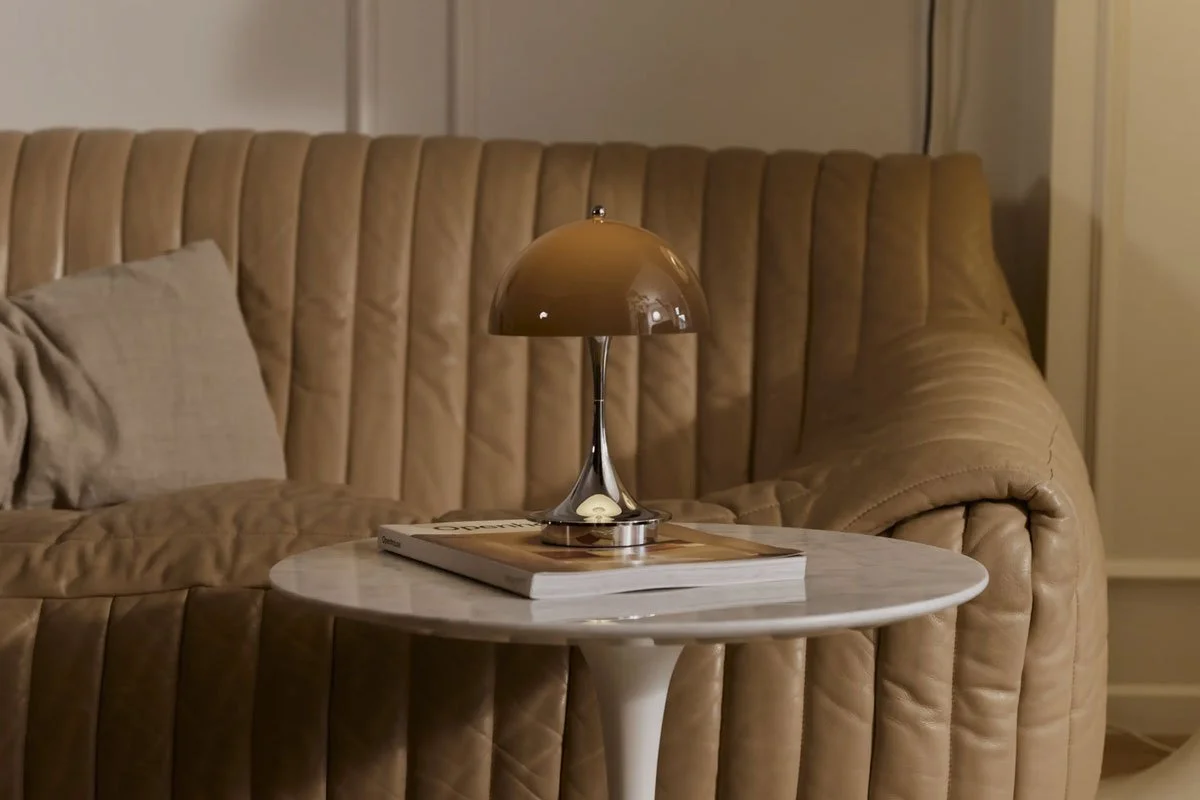
The way we light our homes continues to evolve. For decades, lighting was treated primarily as a practical necessity: a ceiling fixture illuminated a room, a desk lamp provided light for working, and a bedside lamp made reading possible after dark. Today, however, lighting has become increasingly emotional. Rather than simply asking whether a room is bright enough, we are beginning to consider how light makes a space feel.
There are few objects that capture this growing shift toward ambient living better than the Panthella Portable crafted by Louis Poulsen. Originally designed by Danish architect and designer Verner Panton in 1971, thePanthella has become one of the most recognizable pieces of Scandinavian lighting design. Its distinctive mushroom-like silhouette, curved shade, and trumpet-shaped base were designed so both the shade and stand could reflect light, producing a soft, glare-free glow rather than a harsh, direct beam.
More than half a century later, the Panthella Portable takes that same philosophy and adapts it to the way we live now. The Panthella 160 Portable is a smaller, cordless interpretation of the original design, measuring just 160 millimeters, or approximately 6.3 inches, across its shade.Its compact proportions allow it to move easily between a dining table, bookshelf, bedside table, balcony, or garden.
That portability may seem like a small change, but it represents something much larger in contemporary interior design. Our homes are becoming increasingly flexible: Dining tables become desks during the day; kitchen counters transform into places for entertaining at night; balconies function as outdoor living rooms; while bedrooms are expected to provide spaces for sleeping, reading, relaxing, and sometimes working. Fixed lighting cannot always adapt to these changing roles, but a portable lamp can.
The Panthella Portable allows light to follow the person rather than forcing the person to remain beneath a fixed source of illumination. Place it beside dinner, and the table immediately feels more intimate. Move it to a windowsill,and it creates a pool of light rather than illuminating anentire room. Carry it outside, and a balcony can suddenly feel like an extension of the living space. This is the essence of ambient living: designing a home around atmosphere as much as function.
Panton never intended light to simply pour downward from a conventional lampshade. Instead, its hemispherical shade directs light toward the trumpet-shaped base, which then reflects it outward. Depending on the version, opaque shades create downward illumination while opal versions produce a softer, more diffused glow. The result is light designed to shape the atmosphere around it rather than dominate the room.
Its controls are similarly understated. The current Panthella 160 Portable incorporates an integrated LED, a touch control on the top of the lamp, step dimming, USB-C charging, and a rechargeable, replaceable battery, with abattery life of approximately 8.5 hours when used at full output.
Yet technology is not what makes the Panthella compelling. In fact, much of its appeal comes from how effectively that technology disappears.
There is no large screen or complicated interface. The lamp does not demand attention every time it is used. Instead, modern technology has been incorporated into a design created more than 50 years ago without fundamentally changing its character. It is an example of innovation being used to preserve an object rather than reinvent it unnecessarily.
That balance also helps explain why the Panthella continues to feel contemporary. Interior trends change quickly, but Panthella’s simple, organic shape has remained remarkably adaptable. Louis Poulsen now produces the portable model in numerous finishes, from understated neutral tones to orange, yellow, burgundy, moss green, and high-luster chrome. The lamp can therefore function either as a quiet part of a room or as a small piece of sculptural color.
The renewed interest in portable lighting also reflects a broader change in what people expect from their homes. Interiors are increasingly designed to feel layered rather than uniformly illuminated. Instead of relying on one powerful overhead light, smaller sources can createdifferent areas of warmth and intimacy throughout a room. Louis Poulsen itself describes Panthella lamps in different scales and finishes as a way of establishing layered illumination within living spaces.
There is something distinctly human about this approach. Restaurants have long
understood the importance of a small lamp or candle on a table. While hotels use pools of warm light to make largespaces feel intimate. Bringing that philosophy into the home transforms lighting from infrastructure into part of the experience of living.
The Panthella Portable is particularly successful because it does not look like a piece of temporary or utilitarian equipment. When switched off, it remains an object worth looking at. Its silhouette is instantly recognizable, yet simple enough to coexist with interiors very different from those of the 1970s.
Perhaps that is the most interesting thing about its continued relevance. The Panthella Portable is simultaneously nostalgic and distinctly suited to contemporary life. Its form belongs to the design experimentation of the 1970s, while its cordless functionality responds to homes that have become increasingly fluid and multifunctional.
Good lighting does more than allow us to see a room. It can make dinner feel more intimate, an evening feel calmer, or an overlooked corner suddenly inviting. The Panthella Portable understands that distinction.
More than 50 years after Verner Panton created the original, its enduring appeal suggests that the future of the home may not depend on filling every room with more technology. Sometimes, it is simply about using thoughtful design to create the right atmosphere.
Explore the Panthella 160 Portable: Louis Poulsen Panthella 160 Portable Lamp