

Fuijifilm X00VI and the Revival of Intwntional Photography
pcmag
Photography has never been easier. Almost every moment of our lives can now be documented within seconds, edited instantly, and shared with thousands of people before the experience itself has even ended. The smartphone has transformed everyone into a photographer, creating an extraordinary visual record of everyday life. Yet somewhere within that convenience, something has also been lost: the deliberate act of taking a photograph.
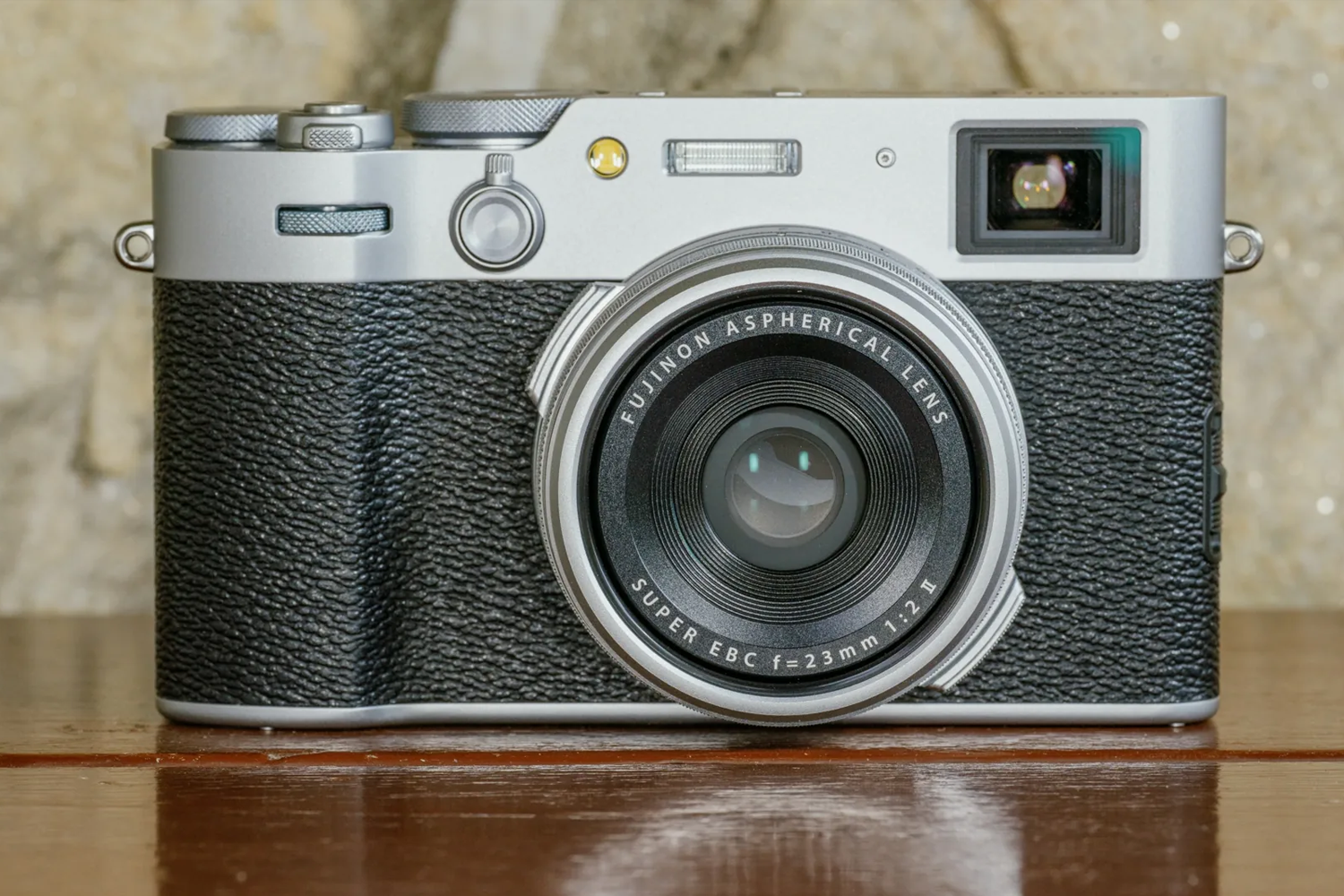
The Fujifilm X100VI represents an interesting response to that shift. Rather than attempting to make photography completely effortless, it encourages the photographer to become involved again. With physical controls, a fixed lens, a hybrid viewfinder, and a design unmistakably inspired by traditional rangefinder cameras, the X100VI turns taking a photograph into an experience rather than simply another function on a screen.
That philosophy is particularly relevant at a time when photography is becoming increasingly automated. Smartphones can identify subjects, correct exposure, and combine multiple frames. enhance colors and make sophisticated computational decisions almost instantaneously. The results can be remarkable, but the process often requires little more than pointing and tapping.
The X100VI asks slightly more of its photographer. Its tactile controls are central to the experience. Exposure compensation, shutter speed, and other settings can be manipulated through physical dials, creating a relationship between photographer and camera that feels intentionally mechanical. The design may recall analog photography, but underneath it sits some of Fujifilm’s most advanced digital imaging technology.
The X100VI combines a 40.2-megapixel X-Trans CMOS 5 HR sensor with the company’s X-Processor 5, alongside subject-detection autofocus and in-body image stabilization offering up to six stops of correction. This combination of nostalgia and technology is part of what makes the camera so compelling.
The X100VI does not attempt to recreate the inconveniences of film photography. Instead, it borrows the elements that made traditional cameras satisfying to use and combines them with the advantages of modern digital photography. Perhaps nowhere is this philosophy clearer than in its lens.
Rather than offering interchangeable lenses or an enormous zoom range, the X100VI has a fixed 23mm F2 lens, equivalent to approximately 35mm on a full-frame camera. For some photographers, that limitation may initially appear restrictive. Yet restriction can also encourage creativity.When zooming is no longer an option, composition becomes physical. The photographer moves closer, steps backward, changes position, and considers what belongs inside the frame. Over time, the fixed perspective becomes familiar. Instead of deciding which lens to use, attention returns to the photograph itself. That idea feels particularly refreshing in a culture increasingly defined by unlimited choice.
The camera’s hybrid viewfinder reinforces the same sense of involvement. Photographers can alternate between an optical viewfinder and an electronic one, combining a more traditional way of seeing the scene with the information and precision offered by digital technology. Looking through a dedicated viewfinder also creates something that photographing through a smartphone often cannot: separation. For a moment, the rest of the world disappears beyond the edges of the frame.
Fujifilm’s Film Simulation modes add another layer to this experience. The X100VI includes 20 simulations, including REALA ACE, alongside familiar options such as Classic Chrome, Velvia, ACROS, and Classic Negative. Rather than treating color exclusively as something to manipulate afterward, these modes encourage photographers to think about the character of an image while they are creating it.
The effect is not simply aesthetic. It changes the rhythm of photography. A photographer might choose a particular simulation before walking through a city and allow that visual language to shape an entire afternoon of images. The process becomes less about capturing everything and deciding what works later, and more about developing an intention before pressing the shutter. That may help explain the broader cultural fascination with cameras that feel distinctly like cameras.
Across fashion, interiors, music, and technology, there has been a renewed appreciation for objects that introduce ritual into everyday experiences. Vinyl records make listening to an album more deliberate. Mechanical watches turn checking the time into something tactile. Printed books create separation from the endless interruptions of a smartphone. A dedicated camera can do something similar for photography.
Carrying the X100VI means making a small decision before leaving the house: I want to take photographs today. That distinction matters. A smartphone happens to contain a camera; the fujifilm exists specifically to create images.
Yet intentional photography does not require rejecting modern technology. The X100VI is capable of recording 6.2K/30p and 4K/60p video, incorporates sophisticated autofocus with deep-learning subject detection, and provides digital teleconverter options alongside its fixed lens. It is technologically advanced precisely where that technology can help the photographer, without allowing those capabilities to overwhelm the physical experience of using the camera.That balance makes the X100VI particularly suited to everyday photography. It is compact enough to accompany its owner through ordinary life rather than being reserved for professional shoots or special occasions. A morning coffee, an interesting storefront, friends around a dinner table, shadows across a building, or a stranger crossing a street can suddenly become worthy of attention. And perhaps that is the real value of intentional photography. The purpose is not necessarily to produce technically perfect images. It is to encourage us to notice things again.
Photography has always been about deciding that one particular fraction of a second deserves to be preserved. Digital technology has given us the ability to preserve almost everything, but abundance can make individual images feel less significant.
The Fujifilm X100VI offers an alternative. Its fixed perspective, tactile controls, film-inspired aesthetics, and modern technology encourage the photographer to slow down just enough to consider the image before capturing it.
In a world where billions of photographs can be taken almost without thought, perhaps the future of photography is not about making the process even faster. It is about rediscovering the pleasure of deciding which moments are worth photographing in the first place.