

Ride Report: Veloretti Ace Two And Amsterdam’s Vision For The Electric City Bike
In Amsterdam, the bicycle has never needed to prove its relevance. It is not a fitness accessory, a weekend hobby, or an alternative form of transportation reserved for the environmentally conscious. It is simply part of everyday life. Bikes line bridges, crowd train stations, and move alongside canals with the same familiarity as cars on an American highway. Due to this, it makes sense, then, that one of the more interesting visions for the future of the electric city bike emerges from Amsterdam itself.
Founded in the Dutch capital in 2012, Veloretti has built its identity around clean, contemporary bicycles designed specifically for daily movement. The Veloretti Ace Two takes that philosophy into the electric age, combining the visual simplicity of a traditional city bike with a surprising amount of technology hidden beneath its understated frame.
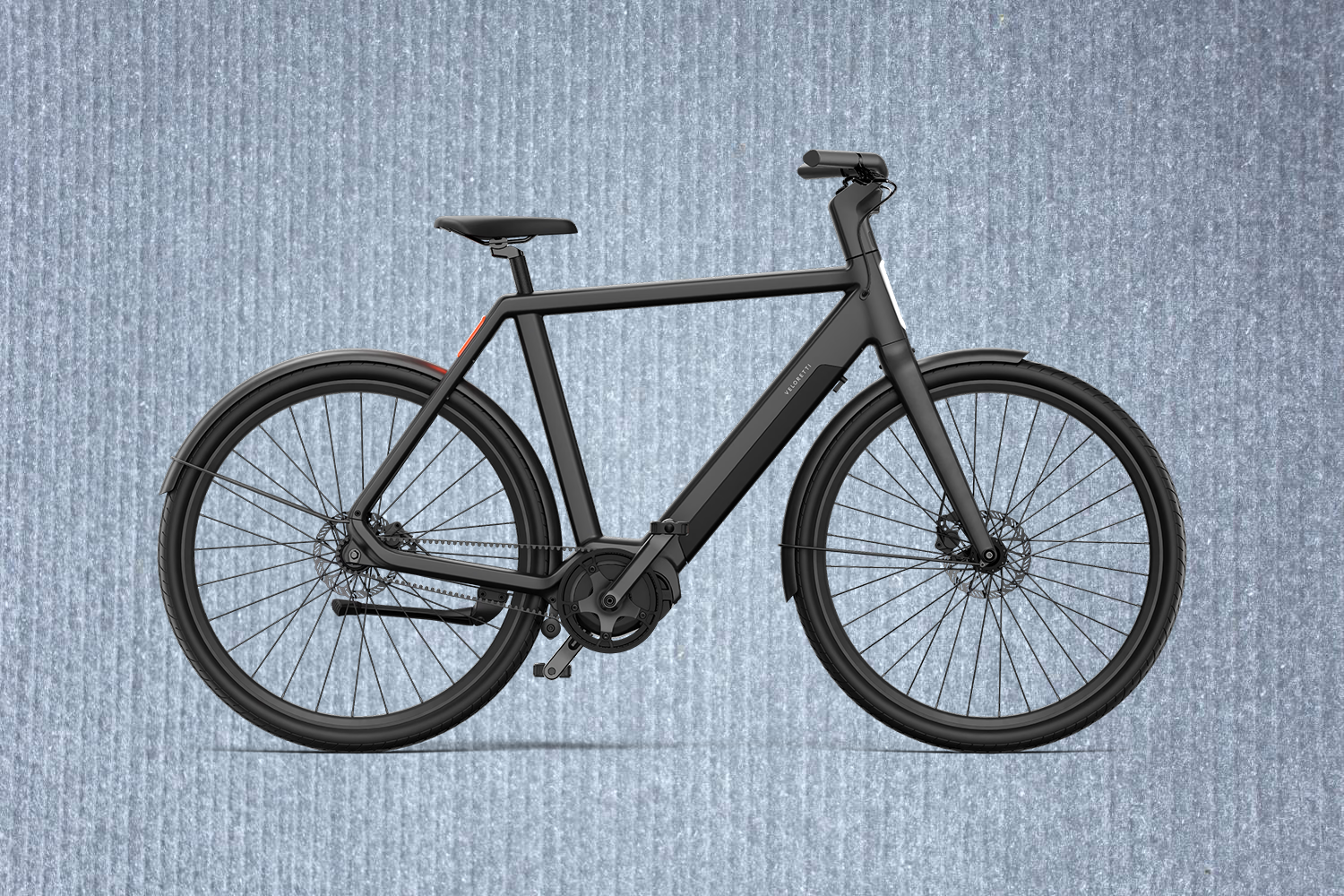
At first glance, the Ace Two does not particularly look like a piece of technology. That may be its greatest design achievement. Philosophy is immediately apparent in the Ace Two itself. At first glance, it does not particularly look like a piece of technology, nor does it seem designed to advertise its electric capabilities. Instead, it resembles a carefully considered city bicycle, with its more advanced features deliberately integrated rather than placed on display. That restraint may be its greatest design achievement: the technology is there when the rider needs it, but it never becomes the defining feature of the bike.
Electric bikes can often announce their functionality through bulky batteries, visible wiring, oversized displays, and frames that appear engineered around their motors. The Ace Two takes the opposite approach. Its battery is incorporated into the aluminum frame, its cables and components are carefully integrated, and a compact display sits neatly within the handlebars. The result is recognizably an e-bike, but one in which the technology does not overwhelm the object itself. That restraint feels distinctly appropriate for Amsterdam, a city where cycling has long been normalized rather than treated as something futuristic.
The Ace Two isn’t trying to reinvent the bicycle. Instead, it asks a more interesting question: how much technology can be added before cycling stops feeling beautifully simple? The answer begins with the motor: The current Ace Two uses a 250-watt Bafang mid-drive motor producing 70 Nm of torque. Rather than assisting solely according to speed, the system responds to how much pressure the rider applies to the pedals. Push harder, and the assistance responds accordingly, creating an experience that feels less like being propelled by a machine and more like discovering your legs have suddenly become considerably stronger.
It is a subtle distinction, but an important one. The best urban technology often works when we barely notice it. Navigation should help us find our destination without becoming the focus of the journey. A motor should make a hill easier without making the bicycle feel like a scooter. The technology becomes valuable precisely because it recedes into the background.
The Ace Two’s removable 540 Wh battery follows the same philosophy. Veloretti estimates a range of between 60 and 120 kilometers, or roughly 37 to 75 miles, depending on terrain, assistance level, and riding conditions. For an urban rider, that creates the possibility of moving through several days of ordinary city life without thinking constantly about the next charge. The drive system also replaces the familiar bicycle chain with a Gates carbon belt. The belt is designed to run quietly without the oil and grime associated with a conventional chain, reducing one of those small maintenance rituals that can make a bicycle feel less convenient as everyday transportation.
The more advanced Ace Two Pro takes that sense of effortlessness further with an Enviolo stepless automatic shifting system. Rather than requiring the rider to constantly think about gears while moving through traffic, the system can manage shifting automatically. The simpler Lite model, meanwhile, uses a single-speed setup, reflecting the relatively flat urban environments for which it is particularly suited.
Perhaps the most revealing part of the Ace Two is found directly between the rider’s hands. An integrated display provides access to ride information, settings, and navigation without requiring a smartphone to remain mounted prominently on the handlebars. Veloretti’s accompanying app adds another layer of connectivity, but the essential riding experience has been deliberately brought back onto the bicycle itself.
Modern life has a tendency to turn every activity into an extension of the smartphone. We use it to pay, navigate, communicate, photograph, work, shop, and entertain ourselves. Cycling has increasingly followed the same pattern, with phones mounted to handlebars and riders navigating another stream of notifications while moving through the city. The Ace Two suggests a slightly different relationship between technology and transportation. Smart functionality remains available, but it does not necessarily require another glowing rectangle demanding attention.
Safety has been treated with similar consideration. Shimano hydraulic disc brakes provide stopping power, while an Osram precision front light is integrated into the design. Veloretti has also developed features including LED brake lighting and safety tracking, reflecting the idea that a connected bicycle can do more than simply measure speed and distance.
These details point toward something larger than the Ace Two itself. For much of the twentieth century, cities were reshaped around cars. Streets became wider, parking became essential, and distances that were once walked or cycled increasingly became journeys made behind a steering wheel. Amsterdam famously followed a different path, developing a culture in which bicycles remained deeply embedded in everyday transportation.
The modern electric bike makes that philosophy newly relevant beyond the Netherlands. Distance becomes less intimidating when a motor assists the rider. Arriving at work without feeling exhausted becomes more realistic. Hills become manageable. Grocery runs, meetings, dinners, and commutes can begin to exist within the range of a bicycle rather than automatically requiring a car, taxi, or train. And importantly, the bicycle itself can remain beautiful.
That is where the Ace Two feels particularly successful as an expression of Amsterdam’s approach to urban mobility. It treats cycling not as a sacrifice made in the name of sustainability, but as an attractive way to experience a city. Technology is present, but design remains important. Practicality does not require abandoning aesthetics.
There is also something fundamentally different about experiencing a city from a bicycle. Streets stop becoming spaces that simply connect one destination to another. Architecture becomes more noticeable. Neighborhoods transition gradually rather than disappearing through a subway window. A coffee shop, bookstore, park, or side street can become an unexpected stop rather than something passed at speed.
Electric assistance does not have to remove that intimacy; if designed carefully, it can expand it.
The Veloretti Ace Two ultimately represents a particular vision of technological progress: one in which innovation does not make transportation more complicated, but quietly removes the reasons we might choose not to cycle.
Amsterdam has spent generations demonstrating what happens when a city makes space for bicycles. The Ace Two asks what happens when the bicycle evolves alongside the city.
Perhaps the future of urban transportation will not arrive in the form of something entirely new. It may look remarkably familiar: two wheels, a set of handlebars, and a rider moving through the streets; only now, with a little intelligence working quietly underneath.